Friday Faves — notes from the new gastroconomy, No. 51

weekly round-up of our favorite finds from the front lines of food
 

  • Truffle sex: "The black truffle has always been assumed to be a self-fertilizing fungus, but it's not..."

  • One of the biggest obstacles to restaurants going green is food waste — hard to track and hard to fix. LeanPath software is trying to help. "When cooks put food waste on the LeanPath scale, they identify it and why they're throwing it away — like overcooked meat or spoiled fish. The software then calculates what that food waste is worth. With that information, a kitchen can figure out how it needs to change, Shakman says. (Watch a demo of how it works here.)"
  • One way to combat food waste is the latest condiment trend: crumbs! Eleven Madison Park in New York City has elevated all the leftover seeds and salt that we all stick our finger into the bag to get into "everything bagel dust."


Friday Faves — notes from the new gastroconomy, No. 50

 weekly round-up of our favorite finds from the front lines of food


  • We found ourselves on a bit of a theme this week with stories from Scotland, and this little gem of a video sealed the deal. Above is a fine example of what the internet was really meant for — a goofy song featured animated Scotch Eggs.
  • It's a little geeky but a cool development for fisheries: the James Dyson Award goes to a new kind of net called a SafetyNet (link to a video that explains it all to you). "The goal of the SafetyNet system is to make commercial fishing more sustainable by significantly decreasing the numbers of non-target and juvenile fish caught during the trawling process."
  • And now to mix it up, an only-in-New York story of the The Lox Sherpa of Russ & Daughters, famous smoked fish emporium of the Lower East Side. "After growing up on a diet of flour paste, cheese soup and butter tea, Mr. Sherpa now subsists on caviar and pickled herring and wild Baltic salmon. Instead of trekking in flip-flops, he hops the F train to work (when it’s running), and he prefers coffee to butter tea. “Forget about it,” he said. “You have to start your day with coffee in this city.”'

Friday Faves — notes from the new gastroconomy, No. 49

weekly round-up of our favorite finds from the front lines of food


In the wake of Hurricane Sandy, our hearts go out to our friends and fellow travelers in food in the Northeast.

We send our best to the farmers who have seen the last of their harvest and their infrastructure destroyed.

To the chefs who will find themselves without a stove once the power comes back and the bills get paid (or not paid).

To the line cooks and dishwashers who can't get to work from the outer boroughs without the subway.

And to everybody who has gone without power, or water or a hot meal.

On a related note, maybe there's hope in one of our favorite foods — oysters. One source for help for increasing storms: plant more oysters argues Paul Greenberg in a New York Times OpEd. "But what is fairly certain is that storms like Sandy are going to grow stronger and more frequent, and our shorelines will become more vulnerable. For the present storm, all we could do was stock up on canned goods and fill up our bathtubs. But for the storms to come, we’d better start planting a lot more oysters."

Friday Faves — notes from the new gastroconomy, No. 48

weekly round-up of our favorite finds from the front lines of food


  • The year — now-ish. Humans have overfished the oceans, taking too much and decadently hurling bycatch overboard. Now, the giant sea creatures of the deep are taking matters into their own "hands" — and they want their fish back... The New short film Monster Roll (above) is the most crazy-awesome thing you've seen this week. Seriously.
  • Geek out with a radio segment from On Point on everything you ever wanted to know about lobster (and more), from biology to art, to Greek Mythology.
  • Cooking made us smarter, or so the research indicates. And sitting around eating all that food was probably pretty good for making culture. "So raise a glass of good wine (fermentation being the other calling card of a higher order brain) and praise the cooks. You'd be stupid without them.

Friday Faves — notes from the new gastroconomy, No. 47

 weekly round-up of our favorite finds from the front lines of food

  • Wine in a box, wine in fake designer handbags, now wine in a can. Hmmm.
  • Campus Farms are springing up all over and now will have help from a new resource called Campus Farmers. '“There’s a great new trend of students growing their own food on college campuses. They’re very excited, but they often have no idea where to begin,” Nicole Tocco, East Coast fellow for the Bon Appétit Management Company Foundation, tells TakePart. “This will be a place where they can post questions, blog posts, status updates and more. There will be a resource section to show them how to get started.”'

Friday Faves — notes from the new gastroconomy, No. 46

weekly round-up of our favorite finds from the front lines of food

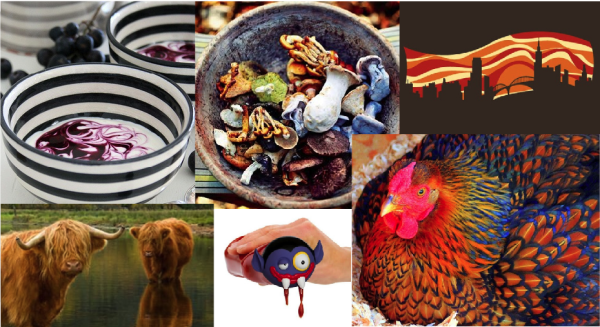
  • Have you visited us on Pinterest yet? A sample of some of our favorite images of the week, above.
  • As Supermarkets Spread in Africa, Some Farmers Find It Hard to Compete. "Supermarket chains are rapidly expanding all over Africa. And they're not just changing the way people shop -- they're transforming the way food is produced in a region where agriculture provides almost 60 percent of all jobs. 'The main problem of the small farmer is market access...How will they put (their goods) into the marketplace?' As supermarkets spread, they could lift millions of small farmers out of poverty by buying from them, or competition from big commercial farms could ruin them."
  • More college grads are heading to the farm."For decades, the number of farmers has been shrinking as a share of the population, and agriculture has often been seen as a backbreaking profession with little prestige. But the last Agricultural Census in 2007 showed a 4 percent increase in the number of farms, the first increase since 1920, and some college graduates are joining in the return to the land."

Friday Faves — notes from the new gastroconomy, No. 45

weekly round-up of our favorite finds from the front lines of food

  • Shining light of the urban food movement Growing Power has announced a $5 million grant from the W.K. Kellogg Foundation to fund “community food centers” aimed at relieving hunger in five of the nation’s poorest areas: Detroit; New Orleans; Forest City, Ark.; Shelby, Miss.; and Taos, N.M. As Grist reported: "Growing Power’s urban projects are frequently the subject of news reports, but the rural ones are rarely described. In the case of the Mississippi Delta, for instance, Allen says, 'Most of the land has gone over to industrial agriculture. It’s devastated those towns, because most of the people used to have their own farms.' Now, he says the area is plagued by drugs, much in the way many urban areas are. And that’s all the more reason why Growing Power’s model can make a difference."
  • Fishing in New England is declared a disaster: “Despite fishermen’s adherence to catch limits over the past few years, recent data shows that several key fish stocks are not rebuilding.... Low levels of these stocks are causing a significant loss of access to fishery ­resources with anticipated revenue declines that will greatly affect the commercial fishery.”


Friday Faves — notes from the new gastroconomy, No. 44

weekly round-up of our favorite finds from the front lines of food

  • As we have noted to ourselves many times while making our way through through a refrigerated warehouse in the early morning hours, fish and glamour rarely go together — until we saw the Fishwives Club range of wines from South African (right).
  • What do you give to the person who has everything? Sea cucumebers are the answer in China. "Much of the demand is driven by the gift trade. One of Bo’s customers, Lin Xiaojian, founder-owner of a welding company, explained he was buying two RMB 590 (US$93) 1-kilogram portions. 'People are spending a lot more on health these days,' explained Lin, before adding that the sea cucumbers were in fact gifts for local officials he’s hoping will give contracts to his firm. 'I used to buy expensive rice wine but these days the fashion is for sea cucumbers … few ordinary people buy them to eat, it’s for gifting to government and army officials to keep good relations with them.'”

Friday Faves — notes from the new gastroconomy, No. 43

weekly round-up of our favorite finds from the front lines of food

  • A sense of whimsy decorates a bar called “Le Nid” (meaning the nest) in Nantes, France.
  • Food has always been part of diplomacy, but now American chefs are being tapped by the State Department as official culinary ambassadors. "The wide-ranging effort creates an American Chef Corps, a network of culinary leaders who could be deployed to promote U.S. cooking and agricultural products abroad."
  • Smithsonian magazine takes a visual tour through the history of the lunchbox, from 19th tins to mid-20th century classics, like the Partridge Family and Lost in Space.
  • There's nothing more mid-century than nuclear obsession. Cold War–Era Science Shows Beer Will Survive a Nuclear Apocalypse "In a world that had seen the potential of nuclear weaponry and that faced the threat of disaster as America and the U.S.S.R descended into the Cold War, a hierarchy developed around facts society might need to know about nuclear explosions. Number 32.2a on that list, apparently, was understanding 'The Effect of Nuclear Explosions on Commercially Packaged Beverages.' Specifically, beer. And soft drinks."
  • Urbanization Puts Farms In Africa's Cities At Risk "The survey — which is the first of its kind — looked at city farming in 31 countries, where more than half of Africa's urban population lives. The authors say that governments need to integrate urban farming into city planning, or else the cities may lose one of their best sources of food."


Friday Faves — notes from the new gastroconomy, No. 42

weekly round-up of our favorite finds from the front lines of food


  • Noodle-bots, taking over a Chinese noodle stand near you. In the video, you can see them (looking very vintage Lost in Space) shaving noodles right into the pot. Prep cooks everywhere, beware.
  • For pointers, and experienced words of caution, listen to the dangerous art of ham-cutting in Spain that covers the how-to's of slicing Iberian ham, which can send some 60,000 Spaniards a year to the emergency room. Maybe a ham-bot is in order.

Friday Faves — notes from the new gastroconomy, No. 41

weekly round-up of our favorite finds from the front lines of food

  • Pastry chefs are tough, and so are their tattoos, like the one at right of a KitchenAid mixer, easily the best of 21 Awesome Culinary Tattoos.
  • Farmers hard hit by the extreme drought are turning to twitter for news and support, but also checking in on the grain market prices via twitter.  Market information that used to take days is now a farmers fingertips. 
  • Mark Bittman, in his latest New York Times Opinionator column, eloquently urges us all to Celebrate the Farmer! "...to get these beautiful veggies, we need real farmers who grow real food, and the will to reform a broken food system. And for that, we need not only to celebrate farmers, but also to advocate for them."  Now if we could just get some rain...
  • If anything is worth signing a petition for it's definitely the White House Honey Ale recipe. Press Secretary Jay Carney says: "Got a Q today on  petition asking us to share WH beer recipe:  If it reaches the threshold, we'll release it"  So far (at the time we are publishing this faves edition) 6,895 have signed.....we only need 18,105 more.
  •  For those of you who didn't know that today, August 24, 2012 is  National Waffle Day, and are just kicking yourselves because you didn't fully celebrate like you think you should, well, it's not too late celebrate.  Thanks to our friends over at Laughing Squid, we found Georgi waffle-flavored vodka. This new libation was launched today, at the breakfast bar (literally!) at the Holiday Inn Express in Stony Brook, NY.  According the good folks over at Georgi in addition to making a fun addition to breakfast, they have concocted a number of waffle-inspired cocktails including the signature waffle-tini — the drink over ice, served with a mini waffle garnish on the rim of the glass.   I guess with enough waffle-tinis, just about anyone could end up with a KitchenAid tattoo!

Friday Faves — notes from the new gastroconomy, No. 40

weekly round-up of our favorite finds from the front lines of food


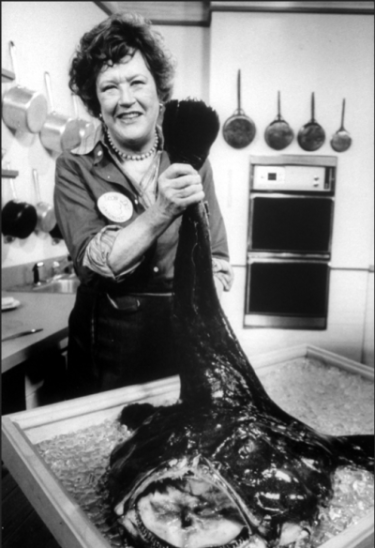
  • August 15 marked what would have been Julia Child's 100th birthday. PBS Digital Studios honored her with a Keep on Cooking remix video. Bon Appétit!
  • There is still time for a good summer read. Check out the Grist food reading list for some tasty ideas!
  • Finally a cell phone policy that pays off. EVA Restaurant in LA explores giving diners a discount if they turn over the phone for the duration of the meal. 
  • The Diawa House takes urban gardening to a new level. The agri-cube can grow 10,000 portions of vegetables per year in a hydroponic unit the fits into the size of a parking space.  Now if they could just incorporate a vending machine component.


Friday Faves — notes from the new gastroconomy, No. 39

weekly round-up of our favorite finds from the front lines of food

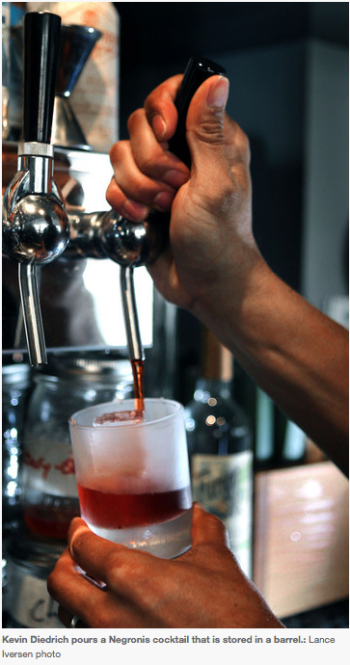
  • Spirits from Asia, absinthe, cocktails on tap (right) and other bar trends.
  • The age-old problem of how to carry your food and drink at a party and shake hands has now been solved by the GoPlate.


Friday Faves — notes from the new gastroconomy, No. 38

 weekly round-up of our favorite finds from the front lines of food

  • Polish turns one! We're celebrating our first year. A big thanks to everyone who's been part of it.


This week, the Faves (like everything else out there) is all Olympics, all the time.

  • Boggled by the numbers? Here's an infographic to get your head around just how much food that is.

Friday Faves — notes from the new gastroconomy, No. 37

 weekly round-up of our favorite finds from the front lines of food

  • Maine lobsters are cropping up in fashion colors, like blue and orange. "Color variation, which is caused by random genetic mutation, is nothing new. But odd-colored lobsters are becoming much more frequent than previously believed. Orange lobsters were thought to be a one-in-10 million occurrence — but a 100 lb. batch shipped to a Maine restaurant last month contained six of them."
  • Mowing kiwi fruit, biking on hills of corn — scenes from Minimiam, an ongoing art series by husband and wife team Pierre Javelle and Akiko Ida, who take tiny toys and place them in worlds made of food via Laughing Squid.

Friday Faves — notes from the new gastroconomy, No. 36

weekly round-up of our favorite finds from the front lines of food

This week we're dedicating ourselves to one of our favorite themes — beer.


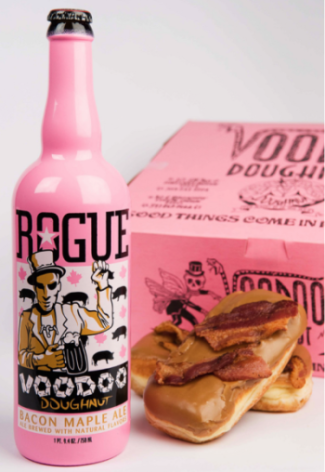
  • Is it really true that everything good in the universe can be combined into one experience? Rouge Ales is giving it a try with it's new maple, bacon, doughnut beer. 
  • We had no idea that London ever fell out of love with beer, but according to the Washington Post, the romance is back on.

Friday Faves — notes from the new gastroconomy, No. 35

weekly round-up of our favorite finds from the front lines of food

  • In the spirit of pre-marinating, you can watch a clam salt itself in what might be one of the strangest youtube videos ever. (What would a Friday the 13th edition be without something weird?)
  • A new resource for designing while hungry — Bacon Ipsum, filler text for your meatiest projects.


Friday Faves — notes from the new gastroconomy, No. 34

 weekly round-up of our favorite finds from the front lines of food


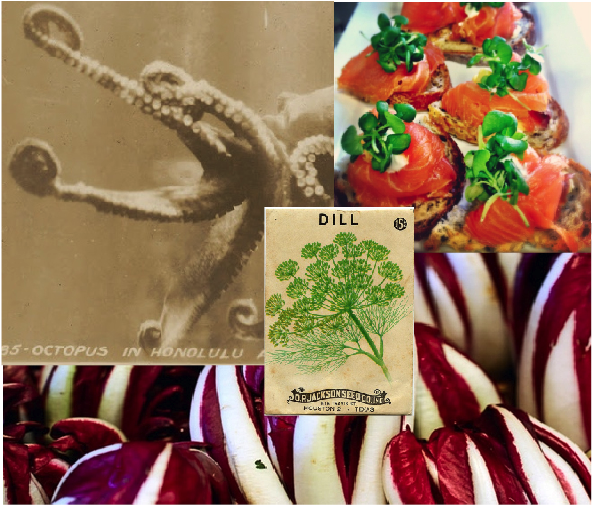
  • Some of our favorite images from Pinterest this week, above. Come on by.
  • "Smart aquaponics" in Oakland, California at Kijani Grows is using tech in new ways: "Gardens that can communicate for themselves using the internet can lead to exchanging of ideas in ways that were not possible before. I can test, for instance, whether the same tomato grows better in Oakland or the Sahara Desert given the same conditions. Then I can share the same information with farmers in Iceland and China.”
  • The New York Times OpEd Dirtying Up Our Diets argues that getting natural with microorganisms and unsanitized food might be just what the doctor ordered: "As we move deeper into a “postmodern” era of squeaky-clean food and hand sanitizers at every turn, we should probably hug our local farmers’ markets a little tighter. They may represent our only connection with some “old friends” we cannot afford to ignore."
  • The title might be inflammatory, but soem interesting points are raised in the recent Salon article Eating Local Hurts the Planet. How your food is produced really, really matters. Shipping is just the part of the food system that we can see. "Not surprisingly, it turns out that food miles can only be taken at face value in the case of identical items produced simultaneously in the exact same physical conditions but in different locations — in other words, if everything else is equal, which is obviously never the case in the real world."
  • Chef Marcus Samuelsson talks about his memoir Yes, Chef and his life in the kitchen on the radio show Fresh Air (audio link).

Friday Faves — notes from the new gastroconomy, No. 33

 weekly round-up of our favorite finds from the front lines of food


  • Another idea that we're excited about: Local Food Lab, a California based incubator and collaborative workspace for early stage sustainable food and farm startups.
  • Hands Off our Special Regions, says the European Commission to an American initiative calling for the unfettered use of what are currently protected food and drink monikers, such as Parmesan and port. How 'bout we put some creativity into creating new names. One of our favorites: Quady Winery's Starboard, a port-style wine made in California.

Friday Faves — notes from the new gastroconomy, No. 32

 weekly round-up of our favorite finds from the front lines of food

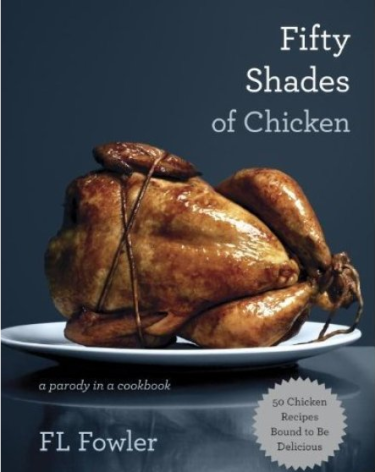
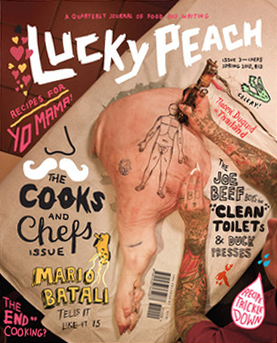
  • What the Pork Fairy might get as a tattoo, on the cover of Lucky Peach food journal.
  • "Driven by a growing awareness that the only thing local in most “local” beers is the water, microbrewers all over the country have begun using regional hops, fruits and honey. Now, many are taking the next logical step and snapping up local grains." Malters Bring Terroir to the Beer Bottle: Mr. Stanley (profiled in the article) "hopes the malt revival can stem the tide of hop-heavy pale ales, enabling craft brewers to focus on malt’s sweet, rich character and, in turn, open up a new kind of terroir for American craft brewers to explore."
  • It's Pastured Poulty Week in Atlanta and Athens, Georgia with over 30 chefs serving pastured birds to introduce them to the public. Chefs explain, that means new education for both customers and staff: “A few years ago we were able to get a very small supply from a gentleman in South Georgia, and when we would serve it, people would say things like it, ‘It’s too flavorful’ — which was funny to me, because, you know, this is what chicken actually tastes like. It made us realize that,  if we were going to change people’s minds about the product, we would have to do it with some education attached.”
  • The Guardian asks: Should we be eating more goat? "When goats are bred for dairy farming, the billies are killed at birth. Why not rear them free-range for meat instead? Says one farmer: "The idea of treating my billies as a waste product doesn't sit comfortably."