Making a Stand-Out Market Stand

this piece was originally published December 22 in Seedstock, the blog for sustainable agriculture focusing on startups, entrepreneurship, technology, urban agriculture, news and research.

Welcome to the second installment of Alisha Lumea and Polly Legendre’s advice column for sustainability-minded food entrepreneurs who are seeking answers to questions about product branding, marketing, development and more.

This week’s questions come from Ryan in San Diego, CA.

Question:

How can a direct to consumer seller at a farmers market make their products stand out more for consumers and/or attract more restaurant buyers?

Answer:

At a farmers market there’s a lot of repetition of goods. If cucumbers are in season, you probably have a lot of them — and so does the stall next to you, and the stall after that.  To sell your cucumbers, you can compete on price, or you can compete on style (otherwise known as perceived value). You can build your style and a better user experience with two basics principles: communication and cultivating relationships.

An easy way to communicate with your customers is better signage, including simple tasting notes. A favorite root vegetable vendor at Union Square Market in New York City sells a dozen varietals of potatoes, each with it’s own tasting note and suggested cooking method. The notes are minimal, like: “Peruvian heirloom, great mashed,” but they help encourage people to try something new and sample multiple products.

Signage, though, doesn’t substitute for conversation. Rather, it helps jump-start questions. Not everyone chats easily with strangers, and a little bit of information can be an icebreaker.  Guaranteed, if you hang a sign that says “ask me about my expert knowledge of hot peppers” you’ll have more conversations about peppers than ever before.

The in-person connection with customers at the market is great, and you can further that bond with an email newsletter and Facebook. More frequent communication with customers allows you to stay front-of-mind, so on market day they come right to you. A newsletter is good because it allows you to capture the customer’s information at the moment when they’re thinking of you instead of relying on them to remember to “like” your page once their back at their computers. And Facebook makes it easy for people to share the information with their friends and introduce you to new audiences.

Updates needn’t (and shouldn’t) be long and involved. Let people know what’s going on at the farm and especially what’s coming into season. In cold climates, foodies wait for the first asparagus like kids wait for Christmas. If you have a favorite way of preparing something, share it here. The more time they spend thinking about you growing their food, the more invested they are in buying from you.

Use your display to draw connections between your farm and products and what else is going on in the good food movement and within your community. Restaurant customers are powerful endorsements, both for consumers and other chefs. If your products are called out by name at a restaurant, have a copy of the menu laminated and at the stand and called out as, for example: “best melons, as seen on the menu at Bistro X.”

If you would like a restaurant to call out your products by name, talk to the chef and offer to display their menu and call out the connection from your stall. The foodies at the farmers market are the same foodies they want dining in their restaurant. Cross promoting helps everyone.

Once you have chef customers, cultivate those relationships. Stay in touch about what’s coming into season. Talk to your chefs about what they’re cooking and what they use. Ask them if there’s anything they wish they could source locally but can’t find.

If you don’t have any customers yet, use a donation to jumpstart some buzz. How about giving apples for snack to your local kids sports team, getting a picture of the kids with apples, and making a sign that says: “Your Farms’ Cortlands — the official apple of the soccer team.” A sign like that will get you attention and goodwill.

Submit Your Question(s) for Next Week!

You can submit your questions via emailfacebook or Twitter.

_____________________

About Alisha & Polly’s company: Polish Partnerships

www.polishpartnerships.com

Polish is a branding and communications company for the new gastroconomy. By creating strong partnerships with food and beverage producers, hospitality groups and industry innovators, we go the extra distance, transforming hopes, dreams and expectations into tangible, sustainable and polished realities.

Friday Faves — notes from the new gastroconomy, No. 10

a weekly round-up of our favorite finds from the front lines of food

  • In hospitality, Bill Marriott, who helped create his family's hotel empire, announced his retirement next year at age 80. He got his start in the kitchen and working as a soda jerk. In an NPR interivew, he talks about the business of the kitchen: "presentation is very important and the details are extremely important."
  • If you want to play restaurateur without losing all your money, try Marriott's game on Facebook where you get to make supply and staff choices and then found out how you're doing.

Sing Along Snacks: Canned Goods

It's never too early or too late for a snack, so crank up that volume on your computer.

Canned Goods by Greg Brown

"Taste a little of the summer. Grandma put it all in jars."


One of Polish's favorite hometown radio stations, KFOG, plays a variety of music all the time, but with the cold December chill setting in (even here in California), we particularly like to hear this song by Greg Brown.

A bit about KFOG.....Throughout the year, the KFOG team puts together all kinds of community supported initiatives such as Live from the Archives albums. Musicians donate the songs and KFOG donates the proceeds to Bay Area Food Banks.

To date, Fogheads have raised over $4,200,000 to help fight hunger in our community.

Proceeds from KFOG Live from the Archives CDs benefit the 7 Bay Area Food Banks: 

Alameda County Community Food Bank

Food Bank of Contra Costa and Solano

Marin Community Food Bank

Napa Valley Food Bank

Redwood Empire Food Bank

San Francisco Food Bank

Second Harvest Food Bank of Santa Clara and San Mateo Counties


Value-added Products & Partnerships

this piece was originally published December 15 in Seedstock, the blog for sustainable agriculture focusing on startups, entrepreneurship, technology, urban agriculture, news and research.

Welcome to Alisha Lumea and Polly Legendre’s inaugural advice column for sustainability-minded food entrepreneurs who are seeking answers to questions about product branding, marketing, development and more.

This week’s questions come from John at Backyard Chicken Run in Chicago, Illinois

Questions:

1) are there products, like say a locally made root beer, or organic stone ground flour, that seem to be succeeding more often than not, in lots of locations around the country?

2) what do your instincts tell you would be the product or products that should have the highest likelihood of success, if there is such a category you can speak to?

Answers: 

Value-added dairy products are a category we’ve seen great examples of all around the country. There are so many delicious, recognizable and well-loved things made with milk and cream — yogurt, crème fraiche, ice cream, and of course, cheese.

Grains fight an uphill battle. The commodity version is inexpensive, and they often live at the bottom of the priority list. Many of the most sustainability-dedicated chefs and consumers start at the top with proteins. They make the best choices they can afford in that category, and work their way back down through dairy, produce and last to pantry staples.  If you’re a bakery, you might be able to stretch your budget to use local honey and some local dairy, but you can’t double the price of flour or sugar and stay in business.

Yogurt, ice cream and cheese have the added advantage of a naturally extended shelf life that gives some breathing room to production and ordering schedules. (In contrast, the minute you pull herbs out of the ground or a fish out of the water, they start losing freshness and value.) From the sales side, they’re versatile and offer a lot of possible customers, fitting into grocery stores, small gourmet shops and within foodservice from neighborhood restaurants to white tablecloth.

From our perspective, the best part of value added dairy products is that they’re a natural for the most exciting opportunities in food — co-productions between farmers and artisans.

Running a farm and selling a branded consumer product are different businesses. There’s a huge difference between making a little jam to sell from your farm stand and making enough jam to sell in shops. Many farmers don’t have the time, inclination or right skills to diversify into these new businesses, although they need new outlets for their raw materials. The good news is they don’t have to do it all. There are loads of aspiring artisans and chefs who have the culinary and business skills to launch these new product ventures and need reliable access to raw materials and a farm to table story.

But real partnership means both sides have to think beyond just the sale in front of them. They have to think about using their best assets to create something sustainable together. (There’s nothing new about this kind of cooperation. Our food system has just gotten out of practice.)

The city chef might have access to buyers and industry contacts, but no storage and no truck. A farm might be able to lend storage capacity and rent out part of their trucks that are already transporting goods to the city, but they may be too far out to constantly promote the product to its best advantage.

Back in October, farmer and good food advocate Joel Salatin addressed the small and passionate crowd at the Chefs Collaborative Summit in New Orleans. This was an audience of food professionals, so he cut to the chase and talked about the real business issues facing farmers — distribution, cost, and seasonal fluctuation.

One example he gave was the huge differential in pastured egg production by season. Customers want the same number of eggs each week, but chickens lay like crazy in late spring and not so much in winter. To keep up with your orders in winter, you need to keep a number of chickens that will have you drowning in eggs when they’re laying at their peak.

Joel Salatin put out the call: what we need are entrepreneurs to come buy all those spring and summer eggs from farmers and make frozen quiche to sell all year. (The same seasonal issues are true at farms of all kinds. Produce farms and orchards have seasonal excess and often a wealth of “seconds” that are perfect for preserving but unsellable fresh. Livestock farmers have cuts that need culinary transformation to appeal to the market.)

Now, we’re the kind of people who actually make quiche at home, but if there was a good tasting frozen option with a good story behind it, we would always have a few in the freezer. We like canning too, but we can’t put up enough to live off of all year. We always want to support the best in local and sustainable food, but we have late work nights and family chaos like the rest of America. Sometimes dinner has to be a low-maintenance affair.

This is what the market has lots of room for: products that transform raw materials that satisfy high standards of taste, ethical production, and a relatable story into something that fills a need in modern life.

_____________________

Submit Your Question(s) for Next Week!

You can submit your questions via emailfacebook or Twitter.

Friday Faves — notes from the new gastroconomy, No. 9

 a weekly round-up of our favorite finds from the front lines of food


  • Talk about a recipe that's set in stone, this ancient Babylonian tablet (left) contains 25 recipes for soups and stews intended for royalty or the gods.
  • "I spent the first two years of college with one question in mind – basically, how can I have the greatest impact in my life in the world. And the thing that I kept coming back to, that everyone connected to, was food." A great NPR story profiling the new, young crop of farmers. The word from an experienced farmer — to make it work, you have to be serious about running the business.
  • Is a caramel ever just a caramel? "Modern Britain is bizarrely food-crazed, and cultural indigestion is the sure result. What if we began to care a little more about what we put into our minds than what we put into our mouths?" asks Steven Poole in The Observer in a rant on the food porn phenomenon. Why should it be minds vs. mouth? Food, and the world of ideas it inspires, nourishes both.


Sing Along Snacks: Call Any Vegetable

It's never too early or too late for a snack, so crank up that volume on your computer.

Dweezil Zappa sings Call Any Vegetable by his dad Frank, with a lot of help from the band. (Some language at end of song NSFW. It's Zappa, what do you expect?)

"You know, a lot of people don't bother about their friends in the vegetable kingdom..."

Friday Faves — notes from the new gastroconomy, No. 8

 a weekly round-up of our favorite finds from the front lines of food


  • Will American consumers enter a brave new world of high-end canned seafood? Stewed monkfish tripe and others from Italian chef Moreno Cedroni are now available on shelves in New York.
  • What will food production of the future look like? check out this floating farm idea, where greenhouses are suspended over cities like giant balloons.

Introducing New Branding Column with Seedstock — Bring Questions

Polish is debuting a new marketing and branding advice column with Seedstock, a blog for sustainable agriculture focusing on startups, entrepreneurship, technology, urban agriculture, news and research.

Bring us your questions!

Published in Seedstock today:

Today Seedstock introduces a new advice column for sustainability-minded food entrepreneurs who are seeking answers to questions about product branding, marketing, development and more. The column will run every Thursday for the next six weeks.

The column’s authors, Alisha Lumea and Polly Legendre together possess over 30 years of experience working both for and as entrepreneurs to promote sustainable food systems.

Each week they will select one or two of your questions to answer.

Questions like:

  • What does my web site need to do for me?
  • I want to sell my product to restaurants — how do I get started?
  • I’d love to get some press, but how do I put together a press kit? Do I even need a press kit? What’s a press release supposed to say anyway?
  • Do I need to trademark my company name?  How can I afford that?
  • The business channel I’m trying to sell my product through isn’t working — help!

The goal is to make this column a place to get answers.

So bring us your questions and your conundrums. Tell us a little about yourself, your business and where you are. You can submit your questions via email, facebook or Twitter.

Friday Faves — notes from the new gastroconomy, No. 7

a weekly round-up of our favorite finds from the front lines of food

  • Cities are trying to lure the entrepreneurs of the new gastroconomy. New Orleans is holding a NOLAbound contest to bring entrepreneurs to the city. Detroit is looking at opening up the city to more farming: "I don't know what will happen... I know some people have expressed concern about turning Detroit into a plantation. That's not going to happen. This isn't about sharecropping. It's about creating economic activity."
  • If you're ready to get active, American Farmland Trust is offering a free webinar December 13 on local planning for food and agriculture.


Sing Along Snacks: Shrimp Boats

In our love of all things food, we have a special love for songs about food. We wet our whistles with Fatback Louisiana, USA back in our Chefs Collaborative Summit round up.

Now, we're kicking off a new occasional blog feature: Sing Along Snacks

It's never too early or too late in the day for a snack, so crank up that volume on your computer.

Shrimp Boats, by Jo Stafford, sung by Dorothy Collins in 1952 in a style as fluffy as a biscuit.

And then a Ska version by Jerry Jackson that you can really dance to.


Polish Addresses Tokyo Creative Cities Conference

On November 23, Polly Legendre represented Polish Partnerships at the Creative City and Global Economy Conference in Tokyo as part of a panel on Innovative Society Empowered by Art, Design and Imagination.


Below is the text of her speech.

Gastronomy is the study of food and culture.  Economy is what keeps us all is business – we need to tap into both.

My name is Polly Legendre and I am first and foremost, a chef de cuisine. I decided to become a chef at the age of 12, and moved to France on the day of my 17th birthday.

I became the first American graduate of the Ecole Superior de Cuisine Francaise and continued working in top Parisian restaurants for nine years.  I have owned two catering companies and was the culinary director and director of vetting for CleanFish, a sustainable seafood company in California.

Now, I am the co-founder of Polish.  Polish helps participants across all food systems find their story and polish it up for the marketplace.

I have always been intrigued by how culinary arts, innovations, and technology converge to what I call the New Gastroconomy.

Gathering around the table to share ideas has been an essential, organizing principle for creative exchange from the ancient world to the modern coffeehouse.  But for those with a culinary vision, finding the economic means to express their art can prove to be difficult. 

This is what we do at Polish: find creative use of social media and online word of mouth marketing that make it possible for the chef to find an audience and for the audience to find the chef.  This person-to-person connection is redefining what an authentic food experience is — largely supported by smartly-leveraged, fast-paced and accessible story telling.

Now, inside the food movement, successful leveraging of technology — both its innovation and application — is allowing the creation of a new Gastroconomy, breaking down barriers to bring the culture of food to the people.

Access to new systems are proving to be far less capital intensive and more nimble, therefore making it possible for the freshest ideas to emerge — and for people to build community around them.

The movement is cooperative, participatory, fast-paced and centered around connection — connecting people to each other and connecting people to their food. In this day in age, social media has indeed created a sort of virtual eco-system.

Staring out with artisan producers:

In the past, small producers needed to find their audience. The smaller you are, and the more specialized, the harder it was.

Now, artisans who are too small or too experimental for the established distribution system can sell their wares online and connect face to face with customers at temporary food marketplaces, such as pop-ups that are organized online and “advertised” through social media.

For example, Christopher Lee, former chef of Eccolo in Berkeley, CA, now runs a pop-up throughout the year where different artisans are featured and actually “pre-sell” their goods.  They use the web to take orders and receive payment up front. This reduces the risk of coming to the city and not selling anything.

When people can’t meet, QR codes attached to the products can take shoppers to a video or message about what they’re buying and who made it. Leveraging this technology is allowing artisan stories to have a lasting effect and creating long term loyal customers who feel connected- both of which are essential steps to effective brand building.

Another example of the QR application is to provide an accountability tool or auditing system. Fishermen off the New England Coast are recording their catch statistics for each trip. This information, in the form of a code, follows the fish all the way to the chefs. In some cases chefs are then passing it on to their client, so the diners themselves can trace the fish all the way back to the boat. So, in this instance, you can see the application of the QR code has created a traceability system for foods instead of just a marketing tool.

As we all know, customers and diners participate more in both time and money when they feel they are part of the process or have knowledge others do not. By posting videos, chefs give customers a privileged view. Much like chef's tables were leveraged in the past, this viewpoint goes a long way to cementing that bond between your operation and your customer.

Another example, the New York restaurant Bell, Book & Candle, uses a system of rooftop hydroponic gardening that you would not “see” as a passive diner,  but instead you can watch videos and it comes to life. We watch chefs shop at the markets and follow them. 

Customers feel that they know something more and will more likely share it. Farmers can show how soil is prepared and the harvest; chefs can share the behind the scenes frenzy without having someone underfoot.  It’s a type of food systems voyeurism, and customers like the opportunity to see into a world they dont have physical access to.

This new paradigm and nimble approach is also supporting the start-up side of business.  Now a young chef who doesn’t have access to the necessary funding to open has options. He or she can start a pop-up restaurant concept, rent or borrow space and bring a spontaneous, performance aspect to the restaurant form. 

In some cities, culinary projects have cropped up where, thanks to virtual story telling, young chefs can “guest chef” for a night or two, thus trying their menus, ideas and testing the ground.  Leveraging this online following and access to community members who are willing to dine on the cutting edge gives young chefs, culinary artists, immediate feedback and a potential client base. Amateurs who think they might want to try their hand at being a chef or restaurant owner are using this same access.

Or they can take their craft literally on the road with a food truck, or in this case a taco bike.

Food trucks are hot across the US right now and frankly this would not be the case if there weren’t a fast paced network like twitter. Twitter has emerged as a one-stop shop for the “I want what I want when I want it” crowd.

Cities are getting into the scene, organizing food truck events like the Off the Grid event in San Francisco.

Virtual maps and accessible databases via smart phones are allowing the public to follow certain chefs and operations.

It can also be a way of getting an active message out about certain issues. For example, the Slapfish truck in Southern California is using the truck to not only serve up incredible seafood dishes, but this classically trained chef is also a huge sustainable seafood advocate and uses the truck and menu to profile seafood choices, showing diners and peers alike that delicious and sustainable can go hand in hand.

Brick and mortar restaurants are also getting into this type of activity. They have seen the value of tapping into a generally younger crowd, and are looking at this technology leverage in order to keep their image “cool” as well as for some very practical economic purposes.  Having a mobile food unit is allowing test markets to determine how the establishment will be received in new neighborhoods, not to mention, there have been instances when the building itself was to be shut down for renovations and the cash flow was still on thanks to the mobile approach.

There is also an environmental aspect to this, as you can now bring a restaurant of sorts to people instead of people coming to one restaurant — one to many instead of many to one.

A recent example of this is Oregon based Burgerville.  They recently developed the Nomad supplementing their 39-store chain. This has helped them enter into twitter and social networking as they never had before. It’s a showcase on wheels.

Twitter is also being used as a live auction site. Fish wholesalers are letting chefs know that only a limited number of pounds of a fresh or exotic fish remain in his cooler. The first one to tweet their order gets it. Restaurants are interacting with guests- real time for reservations, complaints or issues that may crop up and use twitter to book events and last minute replacements for cancelled reservations.

Menu creations and seasonal variations are being tweeted to client followers as well as reviewers.  In fact, this type of technology moves so fast, it does seem to fit with the hyper kinetic activity most chefs engage in.

Interactive projects like crowd-sourced cookbooks and underground supper clubs are attracting local participants, supper clubs are now tapping into online communities to invite tourists to attend for a real and super-local dining experience.

This in-bound tourism and cross channel marketing is bringing together art, food and culture.  As co-founder of Polish, and as a chef, I am dedicated to new systems of urban food production that are bringing the farm to the people, along with a new sense of ownership that is transforming consumers into co producers.  Having a good product is not enough anymore. To participate in the Gastroconomy you need solid brand building, deliciously bringing together art, culture and technology innovations for vibrant commerce and resilient communities.

Friday Faves — notes from the new gastroconomy, No. 6

a weekly round-up of our favorite finds from the front lines of food


  • Drinkify helps you pair music and cocktails. What to drink with Belle and Sebastian — Sipsmith Gin, on the rocks. Aretha Franklin gets her own cocktail of Vodka, Fassionola and Sprite. Serge Gainsbourg calls for nothing less than a full bottle of red wine.
  • The National Young Farmers' Coalition offers community online and with events. "Make out with another person who’s got dirty fingernails!...The NYFC aims to help farmers find each other, whether they’re looking for love or just to commiserate about their 1955 International tractor."
  • Brand early, not often is great advice. "While a business may not need strong branding to get off the ground, its chances of becoming a smash hit are greatly magnified by investing in their brand--in the form of sharp creative strategy and great design--from the beginning." If you don't believe us, check out this video about the power of the iPhone brand (warning, language NSFW).
  • Chefs are turning problems into art, like the invasive species menu at Miya Sushi in New Haven, Connecticut. “Invasive species and climate change, they’re basically brothers,” Chef Bun Lai says.
  • For turning what grows around you into dinner, from weeds to forrest treasures, listen to a full hour of Foraging Fever on NPR's On Point.

Polish to Speak at Tokyo Creative Cities Conference

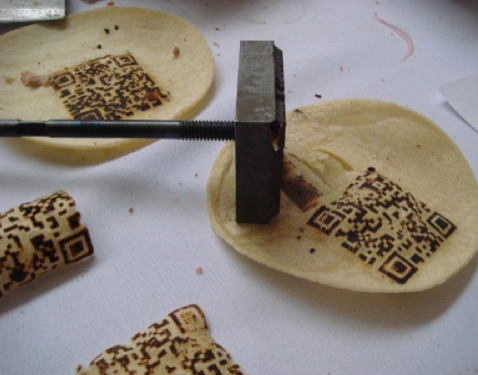
 QR codes are branded onto tortillas at Taranta in BostoOn November 23, Polly Legendre will represent Polish Partnerships at the Creative City and Global Economy Conference in Tokyo as part of a panel on Innovative Society Empowered by Art, Design and Imagination. 

Polly will be presenting on the role of technology as a key driver in the new gastroconomy — where food culture and the economy meet. She will discuss how innovations from social media to QR codes have allowed a whole new chapter of the good food movement to flourish, from fishermen who tweet about their catch to chefs who turn QR codes into plated art.

The Creative City and Global Economy Conference will explore the role of universities, cultural institutions, not-for-profit organizations and public/private partnerships in realizing a truly innovative society.The focus will be on Art, Design, Food, Education and the creative use of information and communications technology, social media, new technologies and social entrepreneurship.

Hosei University, Keio University, Kanazawa Institute of Technology (Toranomon Campus in Tokyo) are the hosting institutions of the event and the steering committee consists of professors from these institutions. Major funding is provided by the Center for Global Partnership, Japan Foundation, a subsidiary of the Ministry of Foreign Affairs of Japan, in conjunction with special support from the American Embassy in Japan and additional funding from Hosei University.

The conference takes place at Hosei University, Ichigaya Campus, and is free and open to the public.

Friday Faves — notes from the new gastroconomy, No. 5

a weekly round-up of our favorite finds from the front lines of food


  • Your computer could learn to make beer: New cyborg yeast can be controlled by computer. Apparently, this could help with future biofuel production.
  • Are cookbooks obsolete? asks the New York Times. Of apps over paper: “You can’t hear the onions sizzling in the pan, or how to move your knife through a salmon fillet, or see how to put your pasta machine back together in a book.”
  • Reading, Writing and Roasting as cooking comes to the classroom. "Teachers and principals are seeing how the classroom cooking experience helps support critical thinking, collaboration, and problem-solving skills."

Reflections on the Condit Dam

On Wednesday, October 26, 2011, engineers blew a hole in the base of the Condit Dam releasing the White Salmon River. 

The White Salmon River, located in south-central Washington, originates on the southwestern slope of Mount Adams, then runs through Klickitat and Skamania Counties, finally draining into the great Columbia River.  In 1913, the Condit Dam was completed, providing hydroelectric power to local industry, but at the same time, creating a significant obstacle to spawning grounds for both native salmon and steelhead.  

The Condit Dam had a good run and served its purpose by providing the area with energy for many years. But, having become no longer cost-effective or useful, a relic of sorts, it was time for the dam to go.  This dam removal, coming weeks after the beginning of the Elwha Dam project, is the latest in a series of major removals taking place across the Pacific Northwest.   

I have family members who live very close to the White Salmon River, and I know it well. I’m certainly not a river guide, but I have fished the now drained Northwestern Lake, rafted the white water above the dam and have even walked the pipe downstream.  I am looking forward to watching how the basin changes in the coming days, months and years.

Quick Facts: 

  • Washington Department of Fish and Wildlife estimates that the dame removal could open 33 miles of habitat for steelhead, 14 miles of salmon habitat and could eventually allow reestablishment of 700 steelhead, 4, 000 spring Chinook, 1,100 fall Chinook and 2,000 Coho salmon.
  • The more than 12-story Condit Dam on the White Salmon River is the second-tallest dam to be demolished in U.S. history.
  • Its two turbines produce about 14 megawatts of power, enough for 7,000 homes, but its owner, Portland-based utility PacifiCorp, elected to remove the dam rather than install cost-prohibitive fish passage structures that would have been required for relicensing.

Watch a great timelapse video via National Geographic.

And White Salmon Restored: A Timelapse Project

Off the Grid, SF

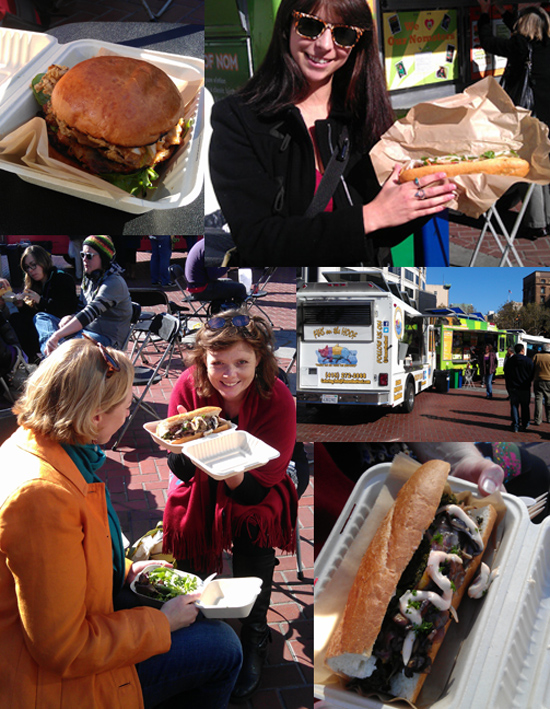
Off the Grid SF "is your roaming mobile food extravaganza -- bringing you delicious food, with free sides of music, craft and soul."

Yesterday at UN Plaza in San Francisco, it was lunch for the Polish team and friend Kelsi Boyle, who took a break from her activism with Woman Care Global to join.

In the lunch line-up was: a grilled pork banh mi from Nom Nom, and from Fins on the Hoof a braised kale, carmelized onion and Irish cheddar sandwich and a crispy pork belly with fried oysters and kimchee relish sandwich (which was just as out of control as that sounds).

We'll be back...


Friday Faves — notes from the new gastroconomy, No. 4

a weekly round-up of our favorite finds from the front lines of food


  • The Wall Street Journal wrote on chefs and twitter in @Foodies: Peak Into My Kitchen. "It's a power tool. Before you had to [spend] a quarter-million dollars in ads to do this."
  • Young entrepreneurs are finding inspiration in the past, from Sheep Lawn Mowers to raising chickens. “It’s a gateway to that whole rural dream...And with the type of recession we’re having, there’s stability in it.”
  • Why stop at 140 characters when you can bring consumers to a world of information. QR codes provide the anti-tweet for wine and other foods. "I’m looking forward to the day when I will be able to scan a QR Code on a barrel of cheese and be transported to a farm instead of a news review."

Get Your Jelly On for Breast Cancer Awareness

October was Breast Cancer Awareness month, and a great time for jelly experimentation.

Ten Australian food bloggers took the challenge set out by Royal Selangor to create 30 jellies in 30-days using a mold designed by Nick Munro. Proceeds from the sale of the jelly mold go towards the Breast Cancer Welfare Association.

Our favorite is a series of short videos produced by Billy Law shooting the jellies over a boombox, each with its own song to jiggle to. His recap of the 30-day challenge is at the top of the post.

Congratulations to all on a job well done. The winner will be announced on November 7.

Other participating bloggers were:

boo_licious http://masak-masak.blogspot.com

Annie and Nate  http://www.houseofannie.com

Gertrude http://www.mykitchensnippets.com

Martyna http://wholesomecook.wordpress.com

Jun http://indochinekitchen.com

LeeMei http://mycookinghut.com

Chopinand & Mysaucepan http://chopinandmysaucepan.com

Shao  http://www.friedwontons4u.com

Terri http://hungerhunger.blogspot.com