Friday Faves — notes from the new gastroconomy, No. 17

a weekly round-up of our favorite finds from the front lines of food


  • Catching invasive species is making town and country strides at being hip. Fishing for snakehead is featured in the current issue of Food & Wine and Trout Unlimited is singing the praises of fly fishing for carp.

DIY Press Savvy, Part Three: Leveraging Your Coverage

this piece was originally published February 16 in Seedstock, the blog for sustainable agriculture focusing on startups, entrepreneurship, technology, urban agriculture, news and research

Thus far, in our three-part series on DIY press savvy for sustainability-minded food entrepreneurs, we’ve covered how to put together your story to resonate with the media, and how to tell it to the right people. In the final part of this series, we look at how to leverage the press you get for maximum benefit. 

Use What You Have

Don’t let the perfect be the enemy of the good. Even if the coverage you receive isn’t everything you hoped for, you can still make it work for you. You will remember the particulars of who said what about you, but most people will just remember that you were written about. In the immortal words of P.T. Barnum: “I don’t care what you say about me, just spell my name right.”

Don’t correct the reporter unless you absolutely have to. If the article misstates the year of your farm’s founding or how many trees you have, just let it go. All that comes of making a writer correct a non-essential detail is that you get remembered as high-maintenance. If, however, the erroneous information is something that will diminish the usefulness of the article, such as a misspelled name or an incorrect web address, send the writer a nice note about it. That way, at least the online version will have the correct information and you can use that clip in your promotions.

Package the Coverage

Since most people that you distribute your press coverage to will not read the full article, pull out a quote or even just a string of words that are complimentary and use that abbreviated content along with the media outlet’s logo when you reference the article. Using the actual image of the publication’s logo is an easy way to increase the impact of your coverage since you’ll benefit from the visual brand association. “The New York Times” as it appears on the front page of the paper looks more impressive than “The New York Times” typed out.

If you’re so lucky as to get a great line in an article that recommends you and your product, then use it. If the article says: “Happy Frogs Farm makes the best pie I’ve ever tasted,” it will be obvious what line to pull out.

If you didn’t get a line like that, you can get creative. Think of movie posters that often grab stray words that proclaim the movies to be “brilliant” and “original,” while the reviews they reference may not be terribly flattering overall. For example, if you receive a line in an article that describes your pie as having “a nice flaky crust with a lackluster filling,” use the following words:

“Nice flaky crust” — The New York Times

You can also adapt the headline. Even if your product was number 10 in a list of 10 and the comments were only so-so, write:

Named one of the 10 Best Apple Pies by The New York Times

Tell Everyone

The day an article comes out people will see it, but if you leave it at that you’re only going to get the recognition that luck brought you on that day. Press that you spread around and talk about, on the other hand, lives on forever. This is no time to be modest. If the idea of name-dropping in conversation makes you queasy, do it in writing.

An article is a third party validation – “Don’t take my word for it that I’m great — The Times says so.” Think of all the places where customers and media look, and all the ways that this third-party validation can help you. Now, you’re not just selling good pies, you’re selling pies that are “Named one of 10 Best Apple Pies by The New York Times.”

You can stretch out your 15 minutes of fame for years as long as you keep talking about it. Make that endorsement into a poster and hang it at your market stand; call it out from the homepage of your web site; attach it to all flyers and promotions; add it to your email signature. You can even add it to your business cards. Until everyone you come in contact with knows that your pies were in The New York Times, you haven’t used the quote enough.

_____________________

About Alisha & Polly’s company: Polish Partnerships

www.polishpartnerships.com

Polish is a branding and communications company for the new gastroconomy. By creating strong partnerships with food and beverage producers, hospitality groups and industry innovators, we go the extra distance, transforming hopes, dreams and expectations into tangible, sustainable and polished realities.
Sing Along Snacks: Candy Man

It's never too early or too late for a snack, so crank up that volume on your computer.

With all that sticky-sweet Valentine's Day candy now on sale, our snack gets a sugar kick. No one does it better than The Candy Man, Willy Wonka.

"The candyman can cause he mixes it with love and makes the world taste good"

Friday Faves — notes from the new gastroconomy, No. 16

a weekly round-up of our favorite finds from the front lines of food

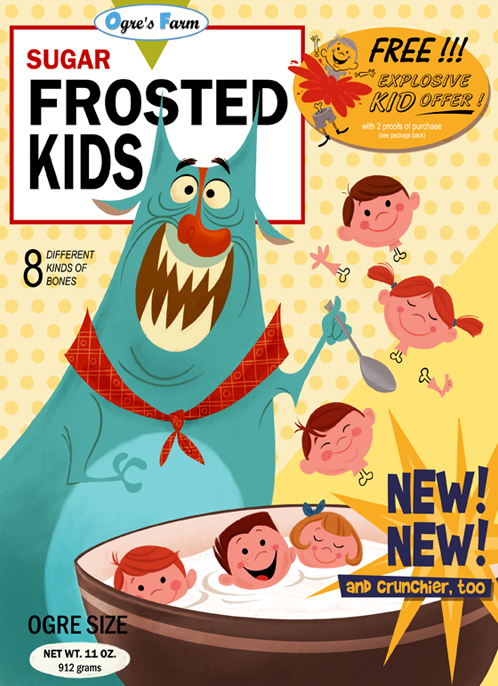
  • It's not just the sugar that will kill you... Cereal killers (left, and more) has some fun with the pop culture form.
  • Is seafood charcuterie taking menus by storm in 2012? Reports from Boston and LA think so.
  • The USDA is giving more grants to farmers for developing value-added products. “The local food movement really took off with most folks selling direct through farmers markets and CSAs, and that’s great, and yet 97 percent of the food consumed in America goes through the wholesale markets. So if we’re really going to create new markets for family farmers and cut food miles, we have to figure out how to get into these markets.”
  • Maine looks for new ways to keeping fishing and fishing culture alive. "I've got all kinds of fisheries policy people, I've got all kinds of fisheries scientists. But we don't have anybody that creates that link back to shore-side business side of commercial fishing, and you can't have one without the other. We need the healthy fisheries, but we have to make sure we have a link back to the shore-side business that supports the sale and development of fish or lobsters or clams or anything else it might be."

Sing Along Snacks: That's What I Like About the South

It's never too early or too late for a snack, so crank up that volume on your computer.

 This Sing Along Snack was submitted by our favorite fishmonger/poet/office rapper and Southerner, Dale Sims.

Phil Harris & Johnny Cash sing about their favorites (song starts at 1:25)

"She's got backbones and turnip greens.

Ham hocks and butter beans

You, me and New Orleans

An' that's what I like about the South"


DIY Press Savvy, Part Two: Telling the Story

this piece was originally published February 2 in Seedstock, the blog for sustainable agriculture focusing on startups, entrepreneurship, technology, urban agriculture, news and research

Last week in our branding and marketing advice column for sustainability-minded food entrepreneurs, we kicked off our three-part series on DIY press savvy by providing advice on how to put together a story that will resonate with the media. This week’s column is all about how to get your story in front of the right reporters.

So let’s begin with the pitch.

While it’s perfectly acceptable to make a phone call to make your pitch, email is generally the best first approach. With email, you won’t catch someone at a bad moment, and you can craft your pitch without worrying about getting flustered mid-sentence or going off-topic.

Long live the personalized note!

The proliferation of media outlets and ways to obtain news has had one really wonderful effect on media relations — it’s made it all more personal. Blasting formal press releases to fax machines everywhere is less useful than ever. The press release is dead. Long live the personalized note!

Not having a one-size-fits-all release means that you can target your email to reporters and editors based on the topics that they write about and the audience for their publication. It means more work for you upfront, but since there’s a greater possibility of making a connection, there is a higher rate of success.

You don’t need to obsess over form, but here are a few good rules of thumb to follow:

Don’t waste your subject line. This is your headline and what will get your email noticed and opened. Have a little fun. A popular reporter at a media outlet has an inbox full of dreary subject lines that he receives everyday. If you can name drop (a well-known chef, romantic origins), by all means do so. Celebrity sells.

Cut to the chase. Keep things brief, or at least offer a brief summary of what you’re talking about up front, and then include more information as an FYI. If the reporter doesn’t know what you’re talking about until the third paragraph, he probably won’t read that far. If you’re story is complex, and you’d like to write up something that is more like a formal release, you can certainly do that. However, it’s still best to start your communication off with a personal note that tells the reporter why the story you are pitching is exciting.

Finding the right fit for your story

Sending your pitch to the appropriate reporter or publication is as important as assembling the elements of a good story. The most reliable way to know you that you are targeting the right person is to read the publications you want to get into, and pay attention to who writes about what. Sending a product pitch to the restaurant reviewer won’t get you anywhere. This is match-making.

If you are unfamiliar with a particular publication, you can work backwards. Available on the publication’s web site, or in the first few pages of a print magazine, is the masthead. The masthead contains a listing of everyone who works at the publication along with their job titles. Typically it is organized by subject (food, travel, environment, business) so you can find the names of the editors and staff writers. Then search by their names to pull up their recent articles, and see what they’ve been writing about. With this information, you can determine to which reporter you should send your pitch. Just make sure that you don’t pitch two people at the same publication at the same time. Nobody wants to go to their boss with a great new story idea only to find out that their office rival has shown up with the same great idea.

Don’t just target the top editors either. There is a lot of value in cultivating relationships all the way down the masthead. All editors, and even interns, are gathering new story ideas, and their youth and ambition can work to your advantage. Many times great coverage comes from a junior staffer, who passionately goes to bat for an idea. They want the best possible exposure for their idea (and possibly the writing credit) to advance their career, so they’ll fight for you and your story.

Once you have the name of a reporter or editor to send your pitch to, you will still need to find his or her contact information. There are guides priced from hundreds to thousands of dollars that promise email addresses and phone numbers for editors and reporters. With a little persistence, though, you can now find all of this information via a Google search. Most business emails follow a formula (e.g. First.last@company.com), so once you’ve found one, you’ve found them all for that publication. If you enter enough likely formulas in a Google search, you’ll probably dig up the address without much trouble.

You can also call the publication. They will usually give you the email address that you need or patch you through to whomever is working on the holiday gift-guide, for example. Freelance writers are easier to get ahold since they often maintain their own web sites.

Another great place to find information is in a publication’s Media Kit, which typically provides details on demographics, circulation and key publication dates. It can usually be found on the publication’s web site at the bottom of the homepage. It will also list any themed issues or special sections that appear throughout the year, such as a “green” issue or a special section on local businesses or food trends that might be a good fit for your story.

If you really want to dive into working with the media, Mediabistro is a resource that can help streamline your information gathering and teach you a lot about the industry. It’s the go-to jobs and news site for media and PR, and it’s where you can pick up information on new editors being hired and new publication launches. The “how to pitch” features provides you with lead times and interests for specific editors and publications as well as their contact information. Some of the content is free. Most is accessible with a subscription ($55 for a year).

Trade Tips & Cautions

The following guidelines will help you navigate like a pro:

  1. Follow up: Stuff gets lost. You won’t be considered a stalker for sending a follow-up email a few days after the first one. Even a third note is OK.
  2. Speed is really, really important: if a reporter calls or emails you, respond immediately. If they are on deadline and calling everyone they can think of, the first one to get back to them wins.
  3. Photos: If you have photos, say so. Having print-quality photos can sometimes make the difference between getting coverage or not. If possible, include a link to where the photos can be viewed online. Don’t send photos (or anything else) as attachments.
  4. Let reporters do their job: Telling the story through their media outlet is the reporter’s job, and you shouldn’t try to micromanage how they run with a story. Don’t ask to read and sign-off on a story before it runs.
  5. Beware of pay-to-play coverage: If the “editor” or “producer” starts talking about “sponsorship,” this is not real journalism. Move on.
  6. Be gracious: Once the article happens, even if it’s only a mention, send the reporter a little thank you note.

Getting media coverage is exciting, but ultimately it’s what you make of it that counts. Tune in next week to find out how to get the most from your 15 minutes of fame.

_____________________

About Alisha & Polly’s company: Polish Partnerships

www.polishpartnerships.com

Polish is a branding and communications company for the new gastroconomy. By creating strong partnerships with food and beverage producers, hospitality groups and industry innovators, we go the extra distance, transforming hopes, dreams and expectations into tangible, sustainable and polished realities.
 

Friday Faves — notes from the new gastroconomy, No. 15

 a weekly round-up of our favorite finds from the front lines of food

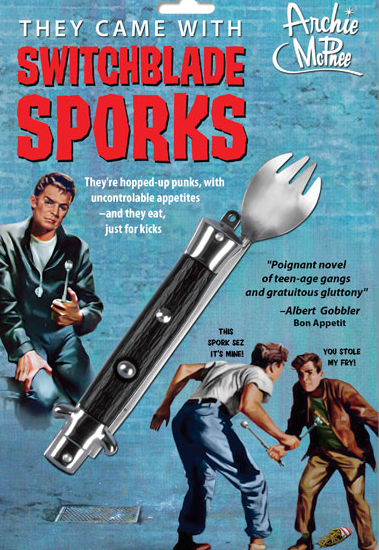
  • "Survival in the epicurean jungle was a matter of brawn and culinary skill, in which mastery of the Switchblade Spork was king. Gangs of sous-chefs and line cooks ruled the streets and no food was safe from the steely glint of their sporks."
  • In tsunami-hit Japan, microfinancing is helping food business get up and running even when banks don't want to lend. "So I wondered if maybe what we do really is important. Many people are waiting for the very original products that we select and sell. They are small goods, but they fill voids in our hearts.”
  • UN asserts that famine is predictable: "drought and famine are not extreme events but “merely the sharp end of a global food system that is built on inequality, imbalances and – ultimately – fragility.”'
  • States, like Massachusetts, are increasingly looking to create brands of provenence to market fisheries. “If we took a look at fish being landed in Massachusetts and put a mark on them ... it allows a story and to tie in what’s happening in New Bedford or Gloucester. It means something to [diners]."

Sing Along Snacks: Coffee Double Feature

It's never too early or too late for a snack, so crank up that volume on your computer.

Frank Sinatra sings The Coffee Song about the zillion tons of coffee that "could percolate the ocean in Brazil"

Then Squeeze with the New Wave classic, Black Coffee in Bed

"there's a stain on my notebook where your coffee cup was"

DIY Press Savvy, Part One: Finding the Story

this piece was originally published January 26 in Seedstock, the blog for sustainable agriculture focusing on startups, entrepreneurship, technology, urban agriculture, news and research.

This week in our branding and marketing advice column for sustainability-minded food entrepreneurs we kick off a three-part series on working with the media that will cover how to develop your story, how to make your approach to the right reporters, and finally how to leverage the coverage you receive.

The media plays such a huge role in society that it often gets talked about as something abstract and impenetrable. Getting coverage is really not all that mysterious, and the priesthood of PR agents isn’t required. With a few pointers and “rules of the road,” you will have everything you need to be a great press agent for yourself. And you will have what no one else can give you — authenticity. Nobody can tell your story with more passion, or explore more facets of it, than you. Authenticity, passion and a well-structured story mean more than an address book full of media contacts.


Part One: Finding The Story

The biggest piece in learning to represent yourself well to the media is understanding what writers and editors need to build a story, and how you can help them put the pieces together.

If you don’t consume much media, such as foodie-focused magazines, local restaurant reviews or newspaper food or environment sections, start now. Look at the stories you read with a critical eye. What are the elements that are strung together to form the narrative of the article? Reading relevant media sources will also help you get to know which writers are interested in what kinds of stories, so you can target your approach (more on that in Part Two).

The first questions you need to be able to answer are: Why you? And why now?

News needs to be, well, new. There needs to be something going on that can capture attention. If you’re new on the scene, you’ll need to introduce yourself and why you matter. If you’ve had some coverage before, you’ll need to give them a reason why you should have more.

“I’m a beet farmer, and beets are really yummy” is not news.

“I’m a beet farmer. I grow a funky heirloom no one else around here has, and these chefs in town are featuring it on their menus.”

Now we’re talking. Your beets aren’t just beets; they’re part of something going on, a trend. If you can’t line up the pieces like this now, don’t worry. We’ll walk you through some ideas of how you can make yourself part of a story.

To create a pitch that you can approach the media with, you have to line up the elements of their article. The more complete your narrative or outline is when you present it, the more likely it is that someone will pick it up. If you’re looking for video coverage this is even more important. They will literally want you to paint a visual picture of what the story will look like — where they can shoot, who will appear on camera. If you have a big sunny kitchen to shoot something cooking or a picture-perfect barn, let them know.

Here’s a few tips to help you put together a press-worthy pitch:

Get personal.  You don’t have to unpack your full life story or innermost thoughts, but give your pitch a personal touch that will help the author flesh out an article. This speaks to the ultimate truth that people are interested in people. Even in coverage of storms and technological innovations, a general interest article will focus in on the people affected, not the wind forces or mechanics.

Are you a career changer with a back-story very different from what you’re doing now? Are you farming land your family has farmed for one hundred years? Do you specialize in heirloom seeds that reflect your heritage or have a special connection to you? Perhaps you learned about them from your time in the Peace Corps or in a restaurant in which you cooked. One of the reasons people like supporting artisans and farmers is because they can feel connected on a human scale. Mentioning a few little details about yourself helps strengthen this connection.

Jump on a train in motion. Taking advantage of existing momentum and getting coverage as part of a trend is a lot easier than breathing life into a totally new topic. Look at what you do with trend-conscious eyes. Is there a new scientific report or news section story that relates to something you do? Is a certain kind of restaurant all the rage in your area and you supply several of them?

Look around your community and reach out to others who could be part of the same story. One farm doing something is random, but three farms doing the same thing is a trend. Line up the potential players in the story when you pitch.

Create your own “why now?” Events are a great answer to why something is deserving of coverage now. If you don’t have anything on the horizon, create something. This isn’t cheating. Organize a farm visit day to celebrate a harvest or talk to your chef customers about creating a special menu featuring produce from your farm. The restaurant might even have a PR firm on retainer that can pull the story together and bring you along with their efforts.

Festivals or holidays, with the exception of ultra-competitive Thanksgiving and Christmas, are also great to tie your events to. Perhaps your region has a seasonal festival or fair. Do you produce something that is part of a traditional food dish, especially one that connects to an ethnic group in your area? That’s a story waiting to happen, and you might be able to get yourself mentioned as part of it.

Being the first one to do something is always a good angle. If you have something new going on in your field, use it. If you’re really not doing anything new and different from your neighbors, you may want to start brainstorming what you might be able to create in order to generate a little flash.

How do you make your pitch to the media once you’ve lined up the elements of a story? Tune in next Thursday.

_____________________

About Alisha & Polly’s company: Polish Partnerships

www.polishpartnerships.com

Polish is a branding and communications company for the new gastroconomy. By creating strong partnerships with food and beverage producers, hospitality groups and industry innovators, we go the extra distance, transforming hopes, dreams and expectations into tangible, sustainable and polished realities.

Friday Faves — notes from the new gastroconomy, No. 14

 a weekly round-up of our favorite finds from the front lines of food


  • Old-school kitchen frugality is elevated to a trend as chefs turn scraps into stunning second acts. “It helps in the cost of running a business and it’s respect for the product. That speaks louder than just the food.”
  • Going right to the source, chefs and farmers join forces, briding the kitchen-field divide and resulting in better ingredients. "There are so many parallels, business-wise, between a farm and restaurant operations that often people on both sides don't see."

Targeting Retail and the Fancy Food Show

this piece was originally published January 20 in Seedstock, the blog for sustainable agriculture focusing on startups, entrepreneurship, technology, urban agriculture, news and research.

Every year thousands of new and established producers looking for a slice of the American retail market throw down some big bucks in summer or winter and exhibit at the NASFT Fancy Food Show, which ran this past week in San Francisco.

Because of the costs of participation (booths start at $3,440, plus transportation to the show, materials, signage, staffing and samples) it skews towards large producers. As a small, farm-based producer, it would be very difficult to recoup your costs. And when you participate in a show, you join the market noise. Getting a shop onboard with your authentic product and story is better done one-on-one. 

You can talk to the retail buyers that are right for you without meeting them at a show. A little detective work can yield a better, more targeted list. Here’s how.

  • Go to the web sites of other products you admire, and that are of comparable price and quality, and check out their “where to buy” section.  That’s your starter list.
  • Look at the Edible Communities advertisers. You can find them in your local print edition or on the web sites of other regional editions. The shops that advertise here are often the kinds of shops that are looking for farm-sourced, artisan products.
  • Keep a running list of what shops are getting written about in food magazines, newspaper food sections and top blogs, likes Tasting Table and Eater. Because keeping up with this information can get overwhelming, set up a custom RSS feed reader that let’s you quickly scan headlines and organize by regions and types. (We use Netvibes, and it’s free.)
  • If your product has seasonal appeal, start way in advance. If holiday sales are what you want, start reaching out in early May. Depending on the size of the shop, they may tell you to try back in a few months, but then you’ll know their schedule and you’ll have the correct contact information in hand.

While exhibiting at the show isn’t a good value for small producers, it’s still a good place to watch for trends and newcomers. We walked every aisle looking for glimmers of authenticity, so you didn’t have to.  Below are a few of our finds.

American artisan cheese was well represented with familiar names like Coach Farm, Vermont Butter & Cheese Creamery, and Cypress Grove Cheve in attendance. The best story here is that great American cheese-making is no longer novel, even at a mainstream show like this one.

The bulk of the show is long-shelf-life packaged goods. A few years ago, you couldn’t turn around without hearing about a new pickle company, but this year the field was spare. There were a few good examples of preserves from both east and west, however. Oregon Growers and Shippers has developed into a really impressive line of jams, butter, honeys and fruit pates that bring together the bounty of the Hood River Valley and surroundings in flavor combinations that give a sense of place, like cherry zinfandel and pear hazelnut. They’re a good example of an artisan and farmers partnership, and they market their farm-sourced story well.  As an endorsement  in their materials from a local orchardist explains: “Their success is our success.” Amen to that.

With a bent towards savory cheese pairings, Virginia Chutney Co. took the time to discuss with us  the difficulties of consistently sourcing locally from small growers. Their berries come from the west coast, but they get the tomatoes for their green tomato chutney from a local farm. Their attempts to use local peaches were thwarted by the extra labor of not being able to get freestones one time, and the bears who ate the best of the crop another. (If you’re in their area with local produce to sell, why not give them a call.)

Candy, cookies and other sweets were a big part of the show, and most on offer were cheap, industrial versions of familiar items. That made goat milk caramel from Fat Toad Farm in Vermont even more delightful. In addition to fresh cheese, they turn milk from their 64-head goat herd into jarred caramel sauces, both unexpected and delicious. Their packaging isn’t flashy but shows how a few thoughtful details can create a distinct look without breaking the bank. Their logo, an image of a fat toad that looks like a children’s book illustration, and touches like burlap gift bags printed with a line drawing of a jar, feel whimsical and farm-inspired without being folksy.

Well-warn paths aren’t the only way to go. Sometimes it pays to be a pioneer. We wrote about Bourbon Barrel Foods in the context of building American regional food identities, and they were at the show in a category all their own with their Kentucky soy sauce.

The most exciting thing that we’d love to see more of is high-end vinegar. A lone example at the show was Gingras, an aged cider vinegar from Quebec. They don’t call out their farm connections nearly as much as they could, but Gingras is made from apples grown in their own orchards and aged in French oak barrels to develop the flavor. We’ve seen fruit vinegars on cocktail menus in Japan, and Gingras was sampling a rum-based cocktail during the show.

Chefs know the value of specialty vinegars in cooking, and this is a trend that could spill over more to home kitchens. Mixologists are also getting media coverage and shaping trends of their own. Across the country, the shelves of specialty food stores are stocked with European and Asian products with very little from the US. For a producer, it’s a higher value product than juice without all the regulation hassle of alcohol. And its appearance on cocktail menus opens up branding possibilities and name recognition for producers. If you’ve got a pioneering spirit and excess produce, it’s time to start experimenting.  Let authenticity and clear flavors (not quirkiness for its own sake) be your guide.

_____________________

Submit Your Question(s) for Next Week!

You can submit your questions via emailfacebook or Twitter.

_____________________

About Alisha & Polly’s company: Polish Partnerships

www.polishpartnerships.com

Polish is a branding and communications company for the new gastroconomy. By creating strong partnerships with food and beverage producers, hospitality groups and industry innovators, we go the extra distance, transforming hopes, dreams and expectations into tangible, sustainable and polished realities.

Friday Faves — notes from the new gastroconomy, No. 13

 a weekly round-up of our favorite finds from the front lines of food

  • A food idea that we hope turns into a bona fide trend: high end vinegar used behind the bar. This week we warmed up with Gingras, an aged apple cider vinegar from an orchard in Quebec, in a rum-based cocktail.  Innovators wanted.

Sing Along Snacks: Hot Tamale

It's never too early or too late for a snack, so crank up that volume on your computer.

Hot Tamale was submitted by one of our younger readers. When we suggested that it was, perhaps, kind of dumb, she countered that it's better than the old fashioned stuff we run.  Well, the kids are alright, and this song is awfully catchy.

"What kind of tamale do you like? Hmm, the hot kind is what I like."

Go Forth, and Deliver – Freelance Foraging and Connecting the Dots

this piece was originally published January 12 in Seedstock, the blog for sustainable agriculture focusing on startups, entrepreneurship, technology, urban agriculture, news and research.

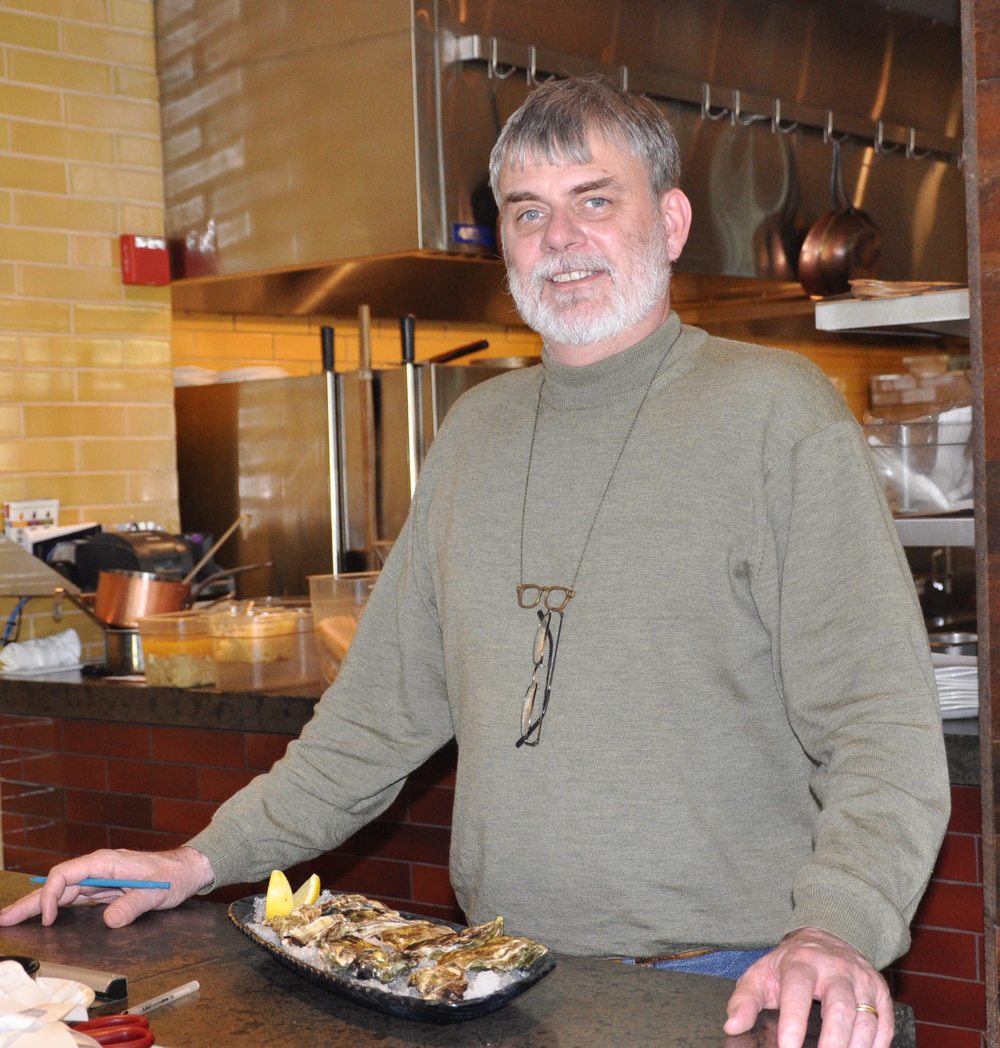
Chef/Owner Rick Hackett of Bocanova in Oakland, CalifThis week we were inspired by a conversation about local sourcing with Chef/Owner Rick Hackett of Bocanova in Oakland, Calif.  Rick is dedicated to buying local for his restaurant. “For the world to survive, we must become more and more local, which means more seasonality,” he explains.  “The more you keep things within four hours or 200 miles, the more you keep it in the community, and that you can feel good about.”

For a chef, finding farmers and ranchers with great, responsibly produced local products is getting easier all the time. But can you get what you want delivered? And what if you’re off the beaten path, or your needs aren’t consistent? We’ve gotten to a place where the mind (and the wallet) is willing, but the logistics are weak.

We hear over and over that direct sales are best for farmers, but it’s not always such a great deal. There’s nothing free about trucking goods around and sitting in traffic, or spending your “day off” standing at a market. Middlemen have gotten a bad reputation from unfairly squeezing both sides of the equation, but there’s nothing inherently wrong with paying someone for the valuable services of transportation and coordination.

“I think a lot of farms would benefit from somebody who would take over the distribution angle. One of the problems is that the more time the farmer is out delivering to me, the less time he is on the farm,” says Rick.

New, alternative delivery models are happening. Polyface Farm in Virginia has created Metropolitan Buying Clubs. Drop-off sites within four hours of the farm, often at a home, are put on a weekly schedule. Orders can vary each week, but to qualify for drop-off, each site must maintain a $1,000 weekly sales average to make the arrangement a good investment for the farm. The cost of delivery to the Buying Club consumers is a flat 28 cents per pound, which covers the cost of the truck, the driver, and the administrative time.

A similar model to the buying clubs, but without a set schedule, are food “hives” in France. La Ruche Qui Dit Oui (literally, ‘the hive that says “yes”’) is a business that helps set up “hives” or local businesses that serve as hubs for locally produced food. Once the “hive” has been created and meets local hygiene codes, farmers connect with members of the hive. There are no ongoing subscriptions, and the members come to collect their goods at the central “hive” or hub. The coordination is all done online. Thresholds are set by the producers, such as 100 kg of apples at a set price. When enough members have committed to buying apples, and the 100 kg threshold is met, then the transaction is completed. The farmer brings the apples to the hub, and members come to collect their orders.

Chef Rick is working on a solution for his own restaurant. It’s a drop box system where other farmers can “drop” their produce off at a walk-in located at one of his suppliers, All Star Farms. Then the farmer, Marty Jacobson, would bring it all down to him at Bocanova. Each farm would invoice Bocanova, and the invoices would be delivered with the produce. The problem is getting all the parts coordinated so it actually can work on a schedule.

Not just a boost for buyers and sellers, finding new ways to move products within urban-suburban-rural food sheds helps us reshape a product’s carbon footprint. Any way possible to spread the carbon load minimizes the footprint of any given product or person. It doesn’t make sense for one worker, in one car, to travel upwards of 20, 50 or 75 miles from an outlying exurb or rural area, then to have a delivery vehicle make a dedicated run to and from that same region to the same restaurant. Know someone working in the city that would like to make a little extra cash? Have restaurant wait staff that live out of town and would like to take on a little foraging?  Maybe produce is the next great carpool partner.

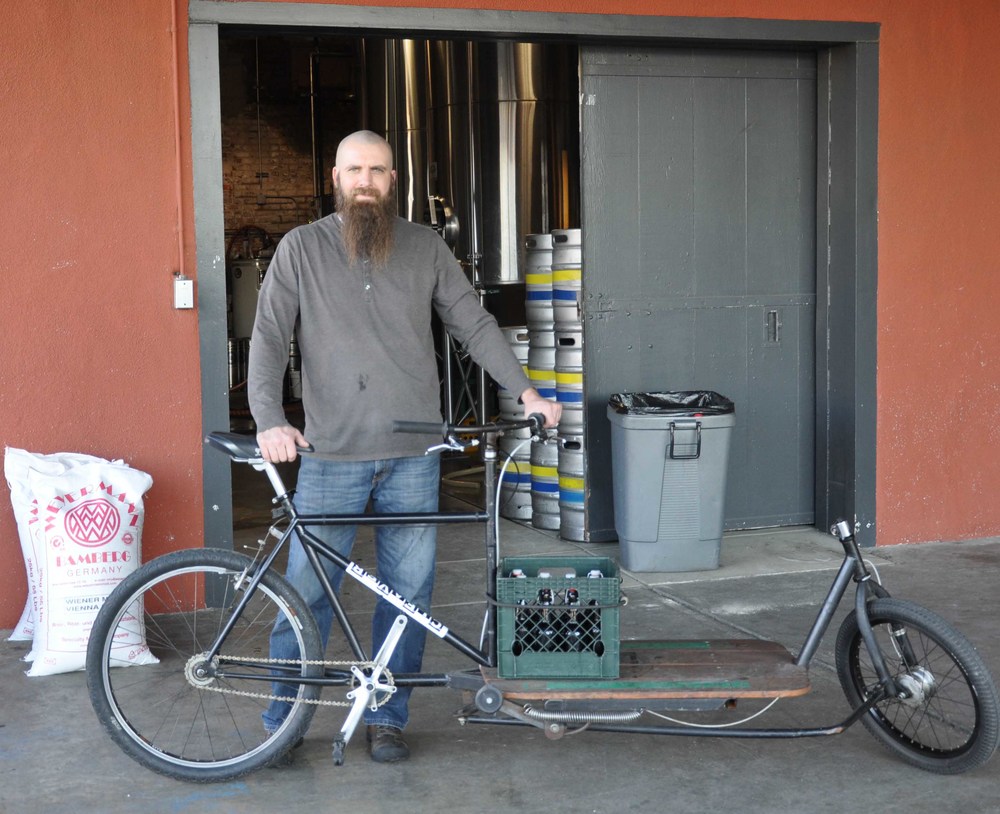
Adam Lamoreaux of Linden St. Brewery, preparing a deliveryFor those searching for how they can make a positive impact for the good food movement, we’ve got a job for you. Freelance forager, farm to kitchen runner — call it what you want, but we need more ways to connect growers to buyers. It may not sound very romantic, but it’s a missing link in the farm to table chain.

Chef Rick points out that foraging could have other benefits. “It could be an entry level position for somebody who wants to get on the farm, because you spend a little bit of time on the farm and then a couple of days for deliveries. That way you get to learn that connection between the farm and the restaurateur. And every chef is looking for something different. You get to learn the idiosyncrasies of what cooks are all about.”

Have you set up alternative delivery models for your farm or business? Tell us about it.

Chef Rick couldn’t resist a shout-out to a few of his favorite sources. At Bocanova, he uses pork from Prather Ranch, eggs from Rolling Oaks up in the Sierra foothills, oysters from Drakes Bay Oyster Company (which is run by the Lunny’s, who also have very nice tasting grass-fed beef cattle that they raise on Lunny Farms), and fresh beer delivered daily by bicycle from Linden Street Brewery in Oakland.

_____________________

Submit Your Question(s) for Next Week!

You can submit your questions via emailfacebook or Twitter.

_____________________

About Alisha & Polly’s company: Polish Partnerships

www.polishpartnerships.com

Polish is a branding and communications company for the new gastroconomy. By creating strong partnerships with food and beverage producers, hospitality groups and industry innovators, we go the extra distance, transforming hopes, dreams and expectations into tangible, sustainable and polished realities.
Friday Faves — notes from the new gastroconomy, No. 12

a weekly round-up of our favorite finds from the front lines of food


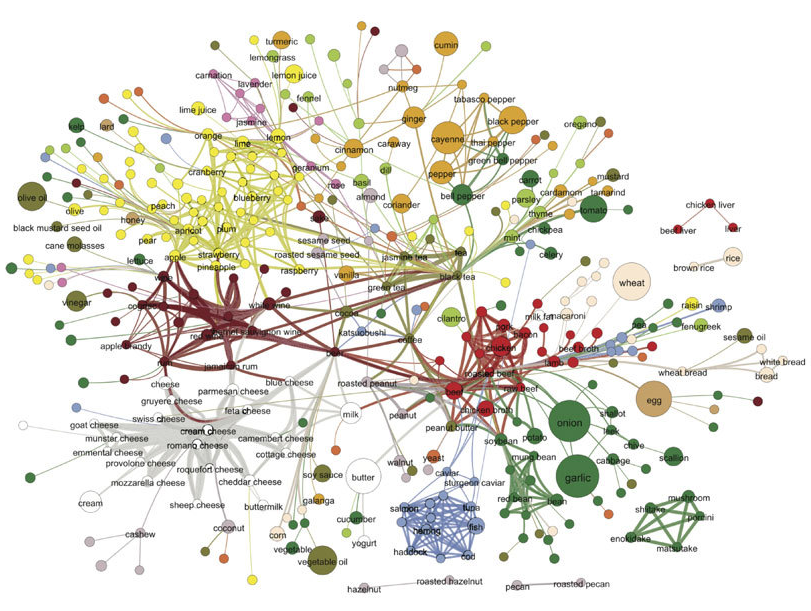
  • Is it possible to scientifically plot out why some flavors go with others? Researchers have tried in Flavor network and the principles of food pairing (illustration above). "A hypothesis, which over the past decade has received attention among some chefs and food scientists, states that ingredients sharing flavor compounds are more likely to taste well together than ingredients that do not."
  • A look at visions of post-industrial Milwaukee explores how urban agriculture and aquaculture are becoming key to reclamation efforts. "What we really like about Sweet Water, and what they’re very adamant about, is that they want to make these spaces productive again. They see themselves as part of a narrative of production in the city of Milwaukee. They see themselves as being in touch with the [industrial past], but working in a way that speaks to the needs of the 21st century."
  • Turning to agriculture as a way to cope with joblessness isn't just for Americans. With Work Scarce in Athens, Greeks Go Back to the Land “In big cities, there’s no future for them. For young people, the only choice is for them to go to the countryside or to go abroad.”

No Brand is an Island – Building American Regional Food Identities

this piece was originally published January 5 in Seedstock, the blog for sustainable agriculture focusing on startups, entrepreneurship, technology, urban agriculture, news and research.

Previously, we’ve looked at beneficial partnerships between artisans and farmers, and how cross-promotion and cultivating relationships with chefs and the community can boost the impact of a farmer’s market stand. With this theme of forging connections, we want to look one step further — to building new regional food identities in America.

The locavore movement has allowed us to think differently and more attentively about the foods of our regions. Like in times past, we are journeying again out onto available land and available cultural space (whether it’s an abandoned city lot or a dozen acres a hundred miles away from our friends and family) to forge new food systems and identities.

The phrase “agricultural renaissance” is gaining steam to describe the energy, excitement and activity in the good food movement. But just like the cultural renaissance in Europe took inspiration from classical sources to move the culture forward into something new, we need to find guiding inspiration in the past that will help us build food systems and cultures that are truly new and truly American.

We understand the complex web of interdependence in nature, but we don’t always appreciate it at a human and economic scale. Creating a web of interdependent regional brands is an ecosystem approach that can have an uplift effect on an entire region. The proliferation of new farms and farmers markets is just the beginning. We need a revolution that is not just broad, but deep. We need to knit brands together — in produce, meat, dairy, wine, beer and more — in ways that build up entire local economies. Economies built around food do more than just support food production. They support restaurants, markets, artisans, bed and breakfasts and agro-tourism. When a region is recognized as the source of many beloved products, it becomes a foodie destination and point of pride, linking the urban, suburban and rural communities that share in the experience.

What makes a regional food identity anyway? Agricultural regions across Europe have cultivated the idea of regional branding successfully for centuries. Take Normandy, a prolific region in northwest France boasting many stand-alone products that come together as a complete package of vibrant agro-tourism and celebrity chefs.

Normandy is a high profile producer of fruit, meats and dairy products that have come to symbolize the region. Normandy produces cheeses like Camembert, Livarot and Pont l’Eveque, not to mention fresh butter and cream from the Isigny region. Normandy apples and pears are known around the world for the ciders, juices and Calvados they produce. Lambs graze on the local salt marshes. Hogs are fed from the fruit orchards, ending up in famous charcuterie such as andouille. A regional cuisine has grown up that highlights these products and the ways they have developed to complement each other.

While there is a healthy dose of competition, the farmers depend on each other to anchor potential customers to the region. A collection of recognized products means chefs and world-renowned hoteliers, such as Relais & Chateau, have been able to open their doors, welcoming both leisure and agro-tourists. International cooking tours come to the Normandy region. Each player in this system produces something unique that they can be proud of, and by celebrating their shared Normandy identity, the whole becomes more than the sum of its parts.

Crafting new American regional food identities is partly about getting in touch with tradition, and partly about making new ones. No one thinks of Kentucky and then immediately thinks of Asian ingredients, but Louisville is now home to an artisan soy sauce producer. Bourbon Barrel Foods is riffing off the Kentucky distilling tradition to create “microbrewed” soy sauce from Kentucky grown soybeans, sweetened with Kentucky sorghum, and aged in re-purposed bourbon barrels. It’s an unusual product (as least for what we think of as being traditional to Kentucky) with undeniable Kentucky terroir that ties together long-standing regional traditions, like bourbon and sorghum as a sweetener, into something entirely new.

The appetite is there. Chefs continue to build menus around regional offerings, diving deeper all the time to get in touch with the best traditional and new products of a given region. Beyond farmers markets, specialty food shops and farmer’s co-ops around the country are providing a strong backdrop for American appellations.

You can build a branded identity for your county, or even your town. You don’t need permission. American appellations are the Wild West. Napa is, after all, just the name of a county. If this sounds far-fetched, look to real estate. When agencies want to brand a neighborhood that never existed before, they make up a name and start using it constantly. A few banners get hung up, a reporter is coaxed into repeating the name, and in a flash — a new branded region is born!

Get a few farms together, reach out to your wholesale customers in the city, and go for it. What are the ingredients your area does best? What are the connections you see that are still to be explored? The more the individual components are called out, the better the picture that is created. For example, pigs that are fed leftover fruit from an orchard can be made into bacon smoked with apple wood from the same orchard, and then served at a restaurant with an apple compote. Cowgirl Creamery in Marin County, California, just north of San Francisco, is using this idea to create new seasonal cheeses. Their St. Pat cheese is made using milk from nearby Chileno Valley Jersey Dairy and is wrapped in the local stinging nettle leaves that grow wild in spring — and all this is all called out in the marketing of the cheese.

This is the time to build deep and lasting identities. We can decide who we want to be, and there’s no impulse more American than that.

_____________________

Submit Your Question(s) for Next Week!

You can submit your questions via emailfacebook or Twitter.

_____________________

About Alisha & Polly’s company: Polish Partnerships

www.polishpartnerships.com

Polish is a branding and communications company for the new gastroconomy. By creating strong partnerships with food and beverage producers, hospitality groups and industry innovators, we go the extra distance, transforming hopes, dreams and expectations into tangible, sustainable and polished realities.
Friday Faves — notes from the new gastroconomy, No. 11

a weekly round-up of our favorite finds from the front lines of food


  • Authenticity is the flavor of the new year, says NPR (and the rest of us): "What might be called urban neo-ruralism has apartment dwellers canning tomatoes, keeping bees and churning butter. The small farmer is the new gastronomic superhero, sourced on restaurant menus." Expect more craft butchers, more unusual meat (at least for Americans) like goat and rabbit, and more small batch distilling.
  • Southern farmers profiled in the New York Times describe "a thriving movement of idealistic Southern food producers who have a grander plan than just farm-to-table cuisine. They want to reclaim the agrarian roots of Southern cooking, restore its lost traditions and dignity, and if all goes according to plan, completely redefine American cuisine for a global audience."
  • Farmers forging partnerships is key to building regional food systems. "Food has really been the bridge that has healed the urban-rural divide."
  • Looking across to Italy, we see farmers carving out new economic niches to flourish, with women-run farms ahead of the curve. Some farms are even offering day care centers as part of the mix. "The involvement of women in multifunctional agriculture has helped society in important ways 'like food security, rural development and the safeguarding of the natural landscape.'”