Friday Faves — notes from the new gastroconomy, No. 32

 weekly round-up of our favorite finds from the front lines of food

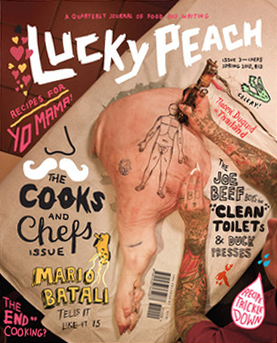
  • What the Pork Fairy might get as a tattoo, on the cover of Lucky Peach food journal.
  • "Driven by a growing awareness that the only thing local in most “local” beers is the water, microbrewers all over the country have begun using regional hops, fruits and honey. Now, many are taking the next logical step and snapping up local grains." Malters Bring Terroir to the Beer Bottle: Mr. Stanley (profiled in the article) "hopes the malt revival can stem the tide of hop-heavy pale ales, enabling craft brewers to focus on malt’s sweet, rich character and, in turn, open up a new kind of terroir for American craft brewers to explore."
  • It's Pastured Poulty Week in Atlanta and Athens, Georgia with over 30 chefs serving pastured birds to introduce them to the public. Chefs explain, that means new education for both customers and staff: “A few years ago we were able to get a very small supply from a gentleman in South Georgia, and when we would serve it, people would say things like it, ‘It’s too flavorful’ — which was funny to me, because, you know, this is what chicken actually tastes like. It made us realize that,  if we were going to change people’s minds about the product, we would have to do it with some education attached.”
  • The Guardian asks: Should we be eating more goat? "When goats are bred for dairy farming, the billies are killed at birth. Why not rear them free-range for meat instead? Says one farmer: "The idea of treating my billies as a waste product doesn't sit comfortably."


Sing Along Snacks: Pineapple Princess

It's never too early or too late for a snack, so crank up that volume on your computer.

Annette Funicello sings of summer love in Pineapple Princess.

"Pineapple princess, he calls me pineapple princess all day as he plays his ukulele on the hill above the bay"

Now if we could just introduce the Pinapple Princess to the Pork Fairy...


Friday Faves — notes from the new gastroconomy, No. 31

weekly round-up of our favorite finds from the front lines of food

  • An amendment to the 2012 Farm Bill would make commercial fishermen eligible to qualify for the U.S. Department of Agriculture’s Farm Services Administration (FSA) Farm Operating Loan Program. The proposed amendment includes “commercial fishermen” within the definitions of “farmer” and “farming.”
  • Small-Scale Slaughterhouses Aim To Put The 'Local' Back In Local Meat including new facilities owned by a co-op of farmers or ranchers. The whole idea is to have quality control and humane processing for local cattle, hogs, sheep and goats that provides consumers in the state with [the] locally produced products they are demanding. Having a producer-owned plan will help keep dollars, ranchers and farmers in our communities."
  • We're fans of the Michael Pollan approach that if a food has health claims tacked on it, it isn't real food, but big companies like Nestle are fighting that. "The unit is due to work closely with the Nestle Health Science company and research institute set up last year that is pushing a drive into medical foods at a time of growing overlap between "Big Pharma" and "Big Food" as many drug companies are investing in non-prescription products including nutrition."
  • While not a strictly food news item, our minds are reeling with the possibilities of showing consumers where their food comes from with augmented reality systems that can make print look like Harry Potter's newspaper.

Sing Along Snacks: Cigarettes & Chocolate Milk

It's never too early or too late for a snack, so crank up that volume on your computer.

Rufus Wainwright sings of his cravings in Cigarettes and Chocolate Milk.

"If I should buy jellybeans, have to eat them all in just one sitting,
everything it seems I like is a little bit sweeter, a little bit fatter, a little bit harmful for me"


Friday Faves — notes from the new gastroconomy, No. 30

weekly round-up of our favorite finds from the front lines of food


  • Above, a few of our favorite pins of the week on Pinterest. If you haven't been by to visit us there yet, you're missing out on the fun.
  • Historical chickens: To accompany their story on the history of the chicken as food, Smithsonian magazine dressed up a few birds (in their ready to roast state) as historical figures. via foodiggity

  • If you're in the market for something even stranger, Brazilian juice maker Camp Nectar embarked on a two year stunt to highlight that their juice is all natural — growing fruit in the shape of a juice box. Check out the video. via psfk

Making Social Media Work for You

This is the second issue of our new column on branding and marketing for SEA, Seafood Experience Australia.

Making Social Media Work for You

originally posted May 18 | by sea |

Recently, we’ve had a lot of questions about social media:

What can I do with it?

Do I have to get onboard or be left behind?

Which platforms are worth doing and what’s the difference?

Doesn’t it take a lot of time, have to be instant, and depend on knowing tricks?

The good news is that you can get value through using social media for your business without making it a full time job — and you probably already know how.

Here’s the secret to getting people to pay attention to you online — be authentic, be interesting, and be generous.

We’ll address the concept of online generosity in a future column.  Let’s look at what it means to be an authentic social media user and a little bit about the networks to know.


Authenticity is in the details

Social media gets talked about in the abstract, but it’s noting on it’s own. It’s a tool.

In the case of these communications tools, the medium is not the message. Social media is really old-fashioned interaction, just faster and louder than ever before.

Social media is a good brand-building tool because it’s another way for your peers and customers to get to know you. “Getting to know you” doesn’t have to mean the personal over-sharing that gives social media a bad rap. We’re not suggesting that your customers want know what your dog looks like in sunglasses or that you’re drinking a latte right now.  They do want a window into your business and your philosophy, so they can feel confident in choosing and supporting you.

Succeeding as a seafood producer takes building solid and direct relationships with customers and throughout the value chain, from distributors to chefs to home cooks.  A key part of customer loyalty is the feeling that a connection has been made.  People like people and people trust people — not companies. For a connection to be made, people need to feel that there’s another actual human on the other side of the transaction.  Big businesses are struggling to recreate the element of human interaction they’ve lost. If you’re running a small business and your customers like you, you already know how to do social media.  The leap is to echo that part of yourself and your business on the platforms that can help you connect.

The networks to know

There are dozens of social media platforms whose names you hear in passing and logos you see scattered across the web. These are the four you need to know and should consider using. While many people and organizations have accounts in all four places, each platform has its own feel and variations on audience.

There are services that allow you to make one comment and simultaneously post to all of your accounts across various platforms.  This saves time, but because it’s a one-size-fits-all blast, it ends up not really fitting anywhere. And when the whole point is to be authentic and connect, a canned message undermines your brand. To keep the time commitment in check, you’re much better off allocating a set amount of time each day, or every few days, to checking in and making a few well thought through posts.

Facebook  Facebook is now so ubiquitous that most people know generally what it’s all about. Even for business, Facebook revolves around people and relationships between people. Making connections on Facebook is like inviting someone over to your house. It’s a place to ask questions and have conversations. The personal and professional lines blur considerably on Facebook. In food, some chefs are here, but it’s most useful for causes and consumer brands.

LinkedIn From being just a place to post your resume several years ago, LinkedIn has grown into the Facebook of business. It’s time to take another look and see if you’re getting all the value you can from it. Like Facebook, you can post professional updates and links. You can join business groups and post as a business. LinkedIn is great for generating insider buzz and staying front-of-mind with your peers, tastemakers and potential customers. Because chefs move around so much, this is a great way to not lose the contacts you have when they switch jobs.

twitter  Twitter is for news sharing and micro-blogging, like pointing to a resource and giving your opinion of it in 140 characters or less. While you can’t say much in 140 characters, you can include a shortened url that directs the reader to an article online or an image with a short caption. Most interesting tweets are pointing to longer articles and are essentially flagging and curating news for like-minded people.

Does anyone really see all this tweeting? Twitter is like standing on a street corner of New York City passing out flyers. Most tweets won’t lead to anything much, but you get noticed and you just might make a fantastic connection you otherwise wouldn’t have.

There is a lot of food and sustainable food movement activity on twitter, so it’s easy to get into the stream of things pretty quickly. Because it doesn’t take much time to check in with, chefs are here and so are distributors to communicate with them. We’ve even seen distributors who use twitter like a live auction and fisherman who post about their catch to chefs while they’re coming back to shore. Most of the food movement and sustainability dialog is by NGOs and journalists. There’s a real need for farmers and fishermen to start participating here to get the producer’s viewpoint into that dialog.

Pinterest  Pinterest is the new darling in town. It’s an all-visual format like a shared online bulleting board. Using it for business is very new, but the number of users on Pinterest and how long they’re spending there in rising rapidly. It’s already shown itself to be really helpful in driving consumer traffic to your web site. To play in this game, however, you need high quality images.
Friday Faves — notes from the new gastroconomy, No. 29

a weekly round-up of our favorite finds from the front lines of food


Sing Along Snacks: Save the Bones for Henry Jones

It's never too early or too late for a snack, so crank up that volume on your computer.

Nat King Cole and Johnny Mercer sing Save the Bones for Henry Jones as a duet.

"Today I’ll go to market / Buy up a lotta fish
Well, that will thrill brother Henry / ‘Cause fish is his special dish
Get a large can of molasses /  So we'll have something sweet to eat
But we’ll save the bones for Henry Jones / ‘Cause Henry don’t eat no meat"

Friday Faves — notes from the new gastroconomy, No. 28

a weekly round-up of our favorite finds from the front lines of food

  • "Imagine you are in a bar or at a friend's place, and you want to sabre a bottle of champagne but, tragically, there is no sabre at hand. Fear not..." So reads The Art of Champagne, Artfully Illustrated, in a style that put us in the mind of What do You Say Dear?, the volume of manners (illustrated by Maurice Sendak) which tackles such social conundrums as "You are downtown and there is a gentleman giving baby elephants to people. You want to take one home because you have always wanted a baby elephant, but firs the gentleman introduces you to each other. What do you say, dear?"

  • And now for something completely different, Crazy Orange Camo Lobster Caught Off the Coast of Maine. His crazy looked earned him a place at the New England Aquarium instead of in a Pepperidge Farm roll with a touch of mayo.
  • In a New York Times OpED Pitting Child Safety Against the Family Farm, Marjorie Elizabeth Wood takes on the red herring that legislation intended to protect farmworkers will really destroy the family farm."The same commercial forces that thwarted the Child Labor Amendment in the 1920s continue to stymie reform today. In an age when Big Agriculture still benefits from the laxity of our child labor laws, the reformers’ legacy is one we would do well to reclaim."


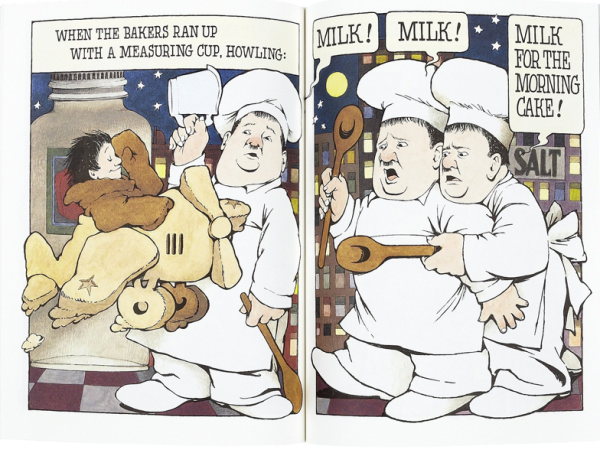
In The Night Kitchen — thank you Maurice Sendak


Maurice Sendak's book In The Night Kitchen was one of my earliest cooking inspirations.

In my mother and grandmother's kitchens, flour and milk could be made into a hundred wonderful things, and there was always something new to try. The book confirmed it — baking was magic.

The night kitchen Maurice Sendak drew stuck with me. It was another world — mysterious, a little dangerous, and filled with strange characters — which is exactly how I found the kitchen when I first started cooking professionally.

"I'm not the milk, and the milk's not me," shouted Mickey before he built his dough airplane and flew into the sky to fetch milk for the cake.

Maurice Sendak sparked the idea that creation and adventure lies within every raw ingredient and every blank page. Every day I sit down to write or open my cabinets looking for something to play with, I find again how true that it.

To quote another of his books, "Let the wild rumpus start!"

Maurice Sendak, Author of Splendid Nightmares, Dies at 83. (New York Times)

Friday Faves — notes from the new gastroconomy, No. 27

a weekly round-up of our favorite finds from the front lines of food

  • An amazing project of food, history and identity, The Southern Discomfort Tour, by the Cooking Gene. Michael Twitty explains the project in an essay entitled The cook who picks cotton: reclaiming my roots. "Slavery is not just a practice or moment in American history; it is a metaphor for our relationships to lifestyles and food systems that many of us view as beyond our control. Most of us are enslaved to food systems that aren’t sustainable, but eat we must. And because we must eat, food is a natural vehicle for telling the kinds of stories about historical slavery and the impact of “race” on how we eat, even as we critique and question our contemporary food politics. Food is our vehicle to move beyond race and into relationships and use those relationships to promote the kind of racial reconciliation and healing, our nation desperately needs."


Polish Up Your Marketing — a new column for SEA

This week kicked off a new column on branding and marketing for SEA, Seafood Experience Australia.

Polish up your Marketing

May 2 | Posted by sea |

Today we introduce a new advice column for sustainability-minded seafood entrepreneurs and seafood professionals who are seeking answers to questions about product branding, marketing, public relations, and more.

The column’s California-based authors, Alisha Lumea and Polly Legendre together possess over 30 years of experience as entrepreneurs, activists and chefs to promote sustainable food systems.

In the column, we’ll tackle questions and concerns such as:

  • What are the best ways to communicate with my customers?
  • What does my web site need to do for me?
  • I’d love to get some press, but how do I put together a press kit? Do I even need a press kit? What’s a press release supposed to say anyway?
  • My sales materials aren’t working — help!

The goal is to make this column a place to get answers, so feel free to bring us your questions and your conundrums. Tell us a little about yourself, your business and where you are.

Up today — customized communications for individual customer groups.  We talk about customers to describe multiple stops on the value chain, but to connect with the customer, you have to understand the needs of who you’re talking to.

Tell the story to suit the audience

More often than not, seafood producers focus their attention on industry-driven information —  the latest technology used, updated hygiene practices, and the like. While this is all relevant and interesting information to aquaculture professionals and fishmongers, it is not the news that end-user customers find compelling. Let’s be honest, the latest fish pump technology is not very appetizing, and ultimately, you’re selling food.

We have to be able to adapt the message to the audience so we’re giving them information they can use. You’re not changing the story, but you are changing the framing.

Distributor purchasing Distributors need information that will allow their purchasing department to decide that your fish is the best bet for quality, shelf-life and that it will sell itself, not clog up the warehouse and sit there.  This is a very important component of selling your fish, but it’s just the first step.

Distributor sales teams The distributor sales team will need information that allows them to quickly grasp multiple facets of your product to make it relevant to their chefs, all on a three minute phone call. They are looking for the edge and what’s new and exciting to help them find the chef “fit.” Remember, these sales teams are managing hundreds of individual chefs and restaurants each day! If you give them what they need, they will talk up your products all day long.

Foodservice & retailers Chefs, waiters, hotels and banquet managers, not to mention retailers, need a slightly different set of information.  They are the front lines of service, telling your products story to the person who will be eating it. This version needs to be much more personal and appetizing.  For people to get excited about eating your fish, they need to feel good about you and your farm. When diners eat in a restaurant, they are putting their trust in the establishment and generally believe that the chef, waiters and counter staff are well informed about the products they are serving. If you supply restaurants and retailers with the kind of information they need to tempt their customers, they’ll push your products for you.

In future columns we will dive into each of these groups, head first and discuss relevant marketing angles (messaging, design, social media, PR and more) that will allow your seafood product to successfully navigate this obstacle course, coming out the other side with the kind of good stories that help make good sales.


About Polly & Alisha’s company: Polish Partnerships

www.polishpartnerships.com

Polish is a branding and communications company for the new gastroconomy. By creating strong partnerships with food and beverage producers, hospitality groups and industry innovators, we go the extra distance, transforming hopes, dreams and expectations into tangible, sustainable and polished realities.

Sing Along Snacks: Food Raps

It's never too early or too late for a snack, so crank up that volume on your computer.

What's Cooking, a new stop motion video where food raps about its favorite subject, food.

Which brought to mind the modern internet classic, It's Getting Real in the Whole Foods Parking Lot

Dj Dave tells it how it is. "You know the deal with the little shopping carts they got."

Forget bling, baby. "I'm just trying to find a decent pinot noir for under 20."


Sing Along Snacks: Louis Armstrong

It's never too early or too late for a snack, so crank up that volume on your computer.

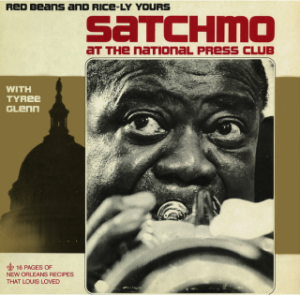
Now that's a snack! A jazz and culinary treasure uncoverd at the National Press Club:

On Jan. 29, 1971, five months before his death, Louis Armstrong performed for the last time, at the National Press Club in Washington, to celebrate the inauguration of Vernon Louviere, a journalist from New Orleans, as the club’s president.

Served with the jazz were bayou dishes including shrimp mousse, jambalaya and a Jamaica rum pie prepared by Christopher Blake, a New Orleans writer and chef.

While not the music from that night, you can tap your foot along to Louis playing Strutting with Barbecue.


Friday Faves — notes from the new gastroconomy, No. 26

a weekly round-up of our favorite finds from the front lines of food


  • The latest entry in the "pornification" of stuff that everybody likes: grilled cheese porn. It's a whole gallery you can view at work.
  • For a look into shifting climate, food and survival, watch the trailer for a new documentary film, People of a Feather: Life on thin ice, about the eider ducks of Nunavut. The Inuit rely on them for meat and their incredibly warm down, but like everything in the Arctic, it all depends on ice.
  • Farmer/thought leader Joel Salatin wrote a response to The Myth of Sustainable Meat OpEd run by the New York Times April 12 which had many of us scratching our heads wondering how in the world the author came up with fantastic "facts" like pastured chickens have a bigger impact on global warming. Aside form debunking some of the nonsense, Salatin continued: "If you want to demonize something, always pick the lowest performers. But if you compare the best the industry has to offer with the best the pasture-based systems have to offer, the factory farms don’t have a prayer."
  • Another topic that got a lot of chatter — dietary tribalism. "The back-and-forth mud-slinging between members of different "dietary tribes" troubles me most. I often imagine all the power that could be harnessed if we stopped and joined forces on some key issues: getting food dyes and trans fat out of our food supply, demanding that the presence of genetically modified organisms and artificial hormones be at the very least labeled on food items, reducing the presence of nutritionally empty foods in schools, facilitating access to healthy foods in "food deserts," constructing a healthier food system (from farmworker to field to table)."

Trailer — A Year in Burgundy Documentary

Watch the trailer for the new documentary film, A Year in Burgundy. The film, by InCA Productions and currently in post-production, follows seven winemaking families in Burgundy, France through the course of an entire year in an exploration of culture, climate and creative process.

A Year in Burgundy will have its first, sneak peak viewing at the 26th Annual International Pinot Noir Celebration (IPNC) in McMinnville, Oregon, July 27 - 29, 2012.

For more, visit the film's web site.