Friday Faves — notes from the new gastroconomy, No. 41

weekly round-up of our favorite finds from the front lines of food

  • Pastry chefs are tough, and so are their tattoos, like the one at right of a KitchenAid mixer, easily the best of 21 Awesome Culinary Tattoos.
  • Farmers hard hit by the extreme drought are turning to twitter for news and support, but also checking in on the grain market prices via twitter.  Market information that used to take days is now a farmers fingertips. 
  • Mark Bittman, in his latest New York Times Opinionator column, eloquently urges us all to Celebrate the Farmer! "...to get these beautiful veggies, we need real farmers who grow real food, and the will to reform a broken food system. And for that, we need not only to celebrate farmers, but also to advocate for them."  Now if we could just get some rain...
  • If anything is worth signing a petition for it's definitely the White House Honey Ale recipe. Press Secretary Jay Carney says: "Got a Q today on  petition asking us to share WH beer recipe:  If it reaches the threshold, we'll release it"  So far (at the time we are publishing this faves edition) 6,895 have signed.....we only need 18,105 more.
  •  For those of you who didn't know that today, August 24, 2012 is  National Waffle Day, and are just kicking yourselves because you didn't fully celebrate like you think you should, well, it's not too late celebrate.  Thanks to our friends over at Laughing Squid, we found Georgi waffle-flavored vodka. This new libation was launched today, at the breakfast bar (literally!) at the Holiday Inn Express in Stony Brook, NY.  According the good folks over at Georgi in addition to making a fun addition to breakfast, they have concocted a number of waffle-inspired cocktails including the signature waffle-tini — the drink over ice, served with a mini waffle garnish on the rim of the glass.   I guess with enough waffle-tinis, just about anyone could end up with a KitchenAid tattoo!

Sing Along Snacks: Mangoes

It's never too early or too late for a snack, so crank up that volume on your computer.

Rosemary Clooney, with her entourage of dancing sailors, sings her 1957 single, Mangoes.


"Now if you like the way I cook, And if you like the way I look  

Then step inside my shady nook  

And you'll find mangoes and papayas, anything your heart desires"


Friday Faves — notes from the new gastroconomy, No. 40

weekly round-up of our favorite finds from the front lines of food


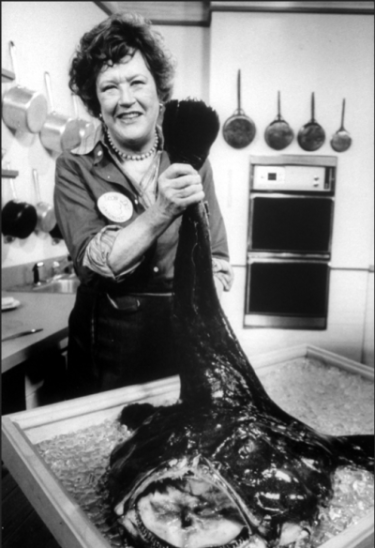
  • August 15 marked what would have been Julia Child's 100th birthday. PBS Digital Studios honored her with a Keep on Cooking remix video. Bon Appétit!
  • There is still time for a good summer read. Check out the Grist food reading list for some tasty ideas!
  • Finally a cell phone policy that pays off. EVA Restaurant in LA explores giving diners a discount if they turn over the phone for the duration of the meal. 
  • The Diawa House takes urban gardening to a new level. The agri-cube can grow 10,000 portions of vegetables per year in a hydroponic unit the fits into the size of a parking space.  Now if they could just incorporate a vending machine component.


Friday Faves — notes from the new gastroconomy, No. 39

weekly round-up of our favorite finds from the front lines of food

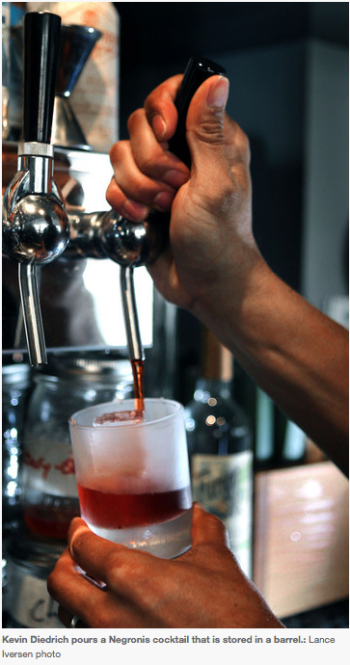
  • Spirits from Asia, absinthe, cocktails on tap (right) and other bar trends.
  • The age-old problem of how to carry your food and drink at a party and shake hands has now been solved by the GoPlate.


Friday Faves — notes from the new gastroconomy, No. 38

 weekly round-up of our favorite finds from the front lines of food

  • Polish turns one! We're celebrating our first year. A big thanks to everyone who's been part of it.


This week, the Faves (like everything else out there) is all Olympics, all the time.

  • Boggled by the numbers? Here's an infographic to get your head around just how much food that is.

Fixing Seafood’s Style Problem

this article was originally posted in our column on branding and marketing for SEA, Seafood Experience Australia.

originally posted July 2012

Seafood has a style problem. If people are going to consume more seafood, they’re going to have to be tempted by it. People buy with their eyes — and that’s not just home cooks. Chefs are products of our image-conscious culture too, and they resonate with the power of good presentation.

Seafood Source has been opening up the discussion of how much need there is for a fresh look. In the Seafood Source Brussels Blog of April 20 this year, editors reviewed the new product winners, concluding: “The judges agreed that the only room for innovation right now is in packaging and marketing.”

In an April 25, 2012 article titled Time Has Come for Packaging Innovation, Steve Hedlund of Seafood Source talked to Simon Smith, sales and Marketing manager for Seachill, which produces the Saucy Fish label in the UK, reporting that in just two years since launching, The Saucy Fish Co. has racked up more than GBP 40 million in sales. Key to the product’s success is the appeal of its packaging. “’The industry is so focused on trading. We did a huge amount of research and found out that the consumer is looking for more warmth and emotion [in packaging].” Smith added that seafood packaging is often “too clinical.’”

The good news: so little is currently being attempted in the marketplace that there’s ample opportunity to innovate and stand out from the competition.


Look Like You Belong

The classic bit of career advice that you should dress for the job you want applies to your product too.  Whether that’s snacks for kids or a white tablecloth restaurant, your product needs to resonate with the consumers you want. It needs to fit their idea of who they want to be and how they want to be living. If you want to design a product that young urban foodies will pick up for dinner, look hip. If you’re product is top quality and expensive, look like you deserve to be expensive.


Consumer Facing

To help you start thinking about what’s possible, we’ve put together a round up of the best new packaging in seafood. (see image at top)

Let’s have a look at what’s working here.

1)     Use of color. Notice there’s no dark blue, maroon or that bright raincoat yellow that makes everybody think of primary school or traffic signs. Lighter, fresher colors are winning the day. Bright colors feel optimistic. In fashionable tones, they can feel sophisticated. Crisp black and white can be both clean and elegant.


2)     Illustration offers a great way to transmit a mood. Think beyond cartoon fishermen and ships’ wheels…please.


3)     Fun. Whimsy. Humor. People like that stuff. Fun doesn’t mean jokey. It’s more about being unexpected.


Trade Facing

To the trade doesn’t need to mean ugly or careless. The chef isn’t going to send out a dish that’s slopped ona plate, no matter how delicious, and expect to win customers that way. Don’t send your fish to the kitchen looking bland and unremarkable.

Fresh seafood comes with the challenge of not being packaged, but it’s all transported in something, even if that’s a shipping box. A good-looking box commands attention and respect. Care went into presenting it, so the message that it should be well treated comes with that. That goes for the driver who loads it onto a truck and the line cook who is sent to fetch it out of the walk-in. It’s says: “I’m the good stuff. Don’t mess me up.”

Additionally, putting a visual with a name makes your product more memorable. To keep customers, they need to remember that you exist. Putting an eye-catching image with your brand name leverages the way people learn to keep your product front of mind for chefs as they pass through their careers and from kitchen to kitchen.

Here are some of the best examples of exterior boxes we’ve seen. They immediately communicate the style and feel of their brand. They look special, but it’s no more expensive to print a good-looking box than an ugly one. There may be a one-time design cost, but it will keep on giving for years. All three of these boxes are single color print jobs on standard materials — most likely what you’re already paying for.

As you think of launching new products or are considering ways to get more market share, remember that a little style and imagination goes a long way.

Friday Faves — notes from the new gastroconomy, No. 37

 weekly round-up of our favorite finds from the front lines of food

  • Maine lobsters are cropping up in fashion colors, like blue and orange. "Color variation, which is caused by random genetic mutation, is nothing new. But odd-colored lobsters are becoming much more frequent than previously believed. Orange lobsters were thought to be a one-in-10 million occurrence — but a 100 lb. batch shipped to a Maine restaurant last month contained six of them."
  • Mowing kiwi fruit, biking on hills of corn — scenes from Minimiam, an ongoing art series by husband and wife team Pierre Javelle and Akiko Ida, who take tiny toys and place them in worlds made of food via Laughing Squid.

Friday Faves — notes from the new gastroconomy, No. 36

weekly round-up of our favorite finds from the front lines of food

This week we're dedicating ourselves to one of our favorite themes — beer.


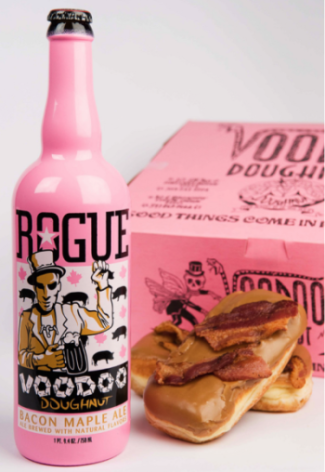
  • Is it really true that everything good in the universe can be combined into one experience? Rouge Ales is giving it a try with it's new maple, bacon, doughnut beer. 
  • We had no idea that London ever fell out of love with beer, but according to the Washington Post, the romance is back on.

Friday Faves — notes from the new gastroconomy, No. 35

weekly round-up of our favorite finds from the front lines of food

  • In the spirit of pre-marinating, you can watch a clam salt itself in what might be one of the strangest youtube videos ever. (What would a Friday the 13th edition be without something weird?)
  • A new resource for designing while hungry — Bacon Ipsum, filler text for your meatiest projects.


Sing Along Snacks: Too Many Dirty Dishes

It's never too early or too late for a snack, so crank up that volume on your computer.

 Albert Collins sings the blues over Too Many Diry Dishes.

"I say there's too many dirty dishes baby in the sink for just us two
Well you got me wonderin' baby who's makin' dirty dishes with you
I go to work in the mornin' I come right home every night
When I leave the sink is empty and when I come back home
My baby got 'em stacked up out of sight"


Friday Faves — notes from the new gastroconomy, No. 34

 weekly round-up of our favorite finds from the front lines of food


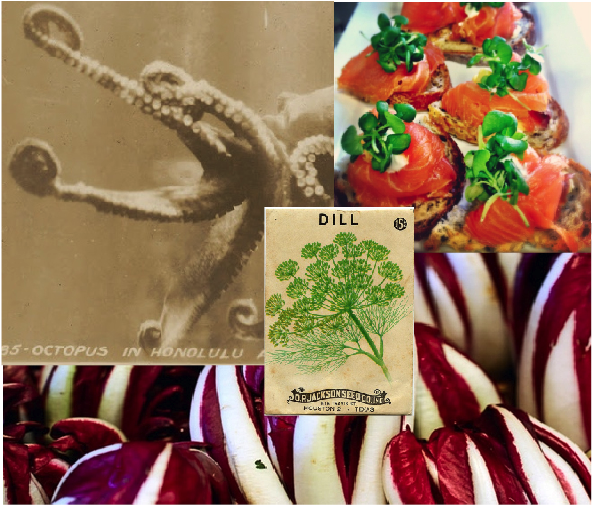
  • Some of our favorite images from Pinterest this week, above. Come on by.
  • "Smart aquaponics" in Oakland, California at Kijani Grows is using tech in new ways: "Gardens that can communicate for themselves using the internet can lead to exchanging of ideas in ways that were not possible before. I can test, for instance, whether the same tomato grows better in Oakland or the Sahara Desert given the same conditions. Then I can share the same information with farmers in Iceland and China.”
  • The New York Times OpEd Dirtying Up Our Diets argues that getting natural with microorganisms and unsanitized food might be just what the doctor ordered: "As we move deeper into a “postmodern” era of squeaky-clean food and hand sanitizers at every turn, we should probably hug our local farmers’ markets a little tighter. They may represent our only connection with some “old friends” we cannot afford to ignore."
  • The title might be inflammatory, but soem interesting points are raised in the recent Salon article Eating Local Hurts the Planet. How your food is produced really, really matters. Shipping is just the part of the food system that we can see. "Not surprisingly, it turns out that food miles can only be taken at face value in the case of identical items produced simultaneously in the exact same physical conditions but in different locations — in other words, if everything else is equal, which is obviously never the case in the real world."
  • Chef Marcus Samuelsson talks about his memoir Yes, Chef and his life in the kitchen on the radio show Fresh Air (audio link).

Sing Along Snacks: Lollipop Double Feature

It's never too early or too late for a snack, so crank up that volume on your computer.

There's just something about summer that puts one in the mood for fluff and nonsense. Behold, a lollipop double feature:

Millie Small sings My Boy Lollipop from 1964.


If that's not goofy enough for you, travel on back to 1958 with The Chordettes and Lollipop, follow the bouncing ball style, on the Andy Williams show.


Mind the Gaps — shepherding your product from purchasers to chefs and diners

Getting your product into a distributor is just the first step, and tailoring you message for just one aspect of the business, like purchasing, can leave you stuck in the enthusiasm gap between purchasing and sales and distributors and diners.

You’ve heard the expression, walk a mile in my shoes.  Well, if it’s a seafood distributor you are talking to, they better be comfortable, all-terrain shoes! Distributors are on the front lines of the marketplace. The purchasing department has to make stocking decisions and then cross their fingers that the outside sales team can actually perform to pull the chosen product through.  On the other side of the warehouse, you have sales teams looking for the latest, greatest, flashiest (and unfortunately often un-tested) product to be stocked by the purchasing department.

Appreciating the needs of different players along the value chain will get your product the attention it needs. To get the excitement of everyone you’ll need, you have to learn when to turn up the romance and when to play it straight.


Purchasing — Just the Facts

The purchasing department is faced with making fast-paced decisions on what to stock and when to speculate, all while keeping close tabs on current inventory.  While a fine-tuned purchasing department works closely with the sales director, there is a particular set of details and information that the purchaser needs to consider your seafood product as a viable option.

The key is concise, clear, easy to find information. Communicating clearly with the purchasing department doesn’t have to be cumbersome or even require a separate document.  When developing a sales sheet, integrate a call out area with nuts and bolts product information: sizing, packs, cuts, certifications, etc.

This is not an area for a sales “pitch,” but instead the information here should be straightforward and crystal clear. Don’t make the purchaser read through a full paragraph in order to find out if your product is packed in a 20lb or 50lb box, whole or fillet.  The more clear and concise you are the better chance you have of getting an order.  Some distributors are partnering with foodservice groups, contract negotiators or are serving retailers who must follow particular sourcing mandates.  In your product meets particular program guidelines or certifications, you should call this out in an easy to access format.


Nothing Sells Itself — Sales Reps Sell It

Facts alone can get you an order, but facts alone won’t get you into the kitchen. Once the purchaser has granted your product a spot on the shelf, your job as the producer is not over yet. It’s easy to think that the quality of your product will speak for itself and it will fly out the door to the best kitchens, but your product will only get there if you have a sales rep willing to propose it to the chef.

The more interest sales reps take in your product, the better it will move — and your job is to give them enough details to work with, both technical and personal.

Sales reps are the ultimate multi-taskers.  They deal with hundreds of personalities and are the pivot point between the distribution warehouse and the kitchen. A good sales rep will need to navigate the local food scene and find the fit between their accounts and the products in their portfolio.  They know how to match the product detail to the chef. A chef committed to local sourcing and supporting the community will want to hear about how you interact with your community, for example. The more aspects of what you do that your materials touch on, the more opportunities there are for a sales rep to get excited about your product and find a fit.

But keep in mind that since the sales rep is the conduit to the table, the story they tell to place the product in the kitchen may ultimately be told table-side.


Know your selling points (hint — they don’t involve the word hygiene)

The details that make the difference may be more personal than you think. We all make buying decisions partly by the facts and partly by emotion. Especially in a crowded field of similar products, emotion may win the day. A detail about the town you operate from can do more to add to your general appeal than how you use the latest device.

Seafood producers can be thrilled with the details of the latest hygiene standards or technology, but that’s not how people want to think about their food.  The last thing that a diner out for a relaxing evening wants to hear about is hygiene.  Diners expect chefs to have complete control over the health, cleanliness and integrity of the product they are serving. Instead, diners want to be reassured that what they are about to eat, was brought to them with the utmost respect and with their enjoyment in mind.  Customers want to “feel” good about eating and enjoying their meal. They want the restaurant to paint them a picture that they feel good about choosing.

When developing your messaging points think through every aspect of you and your production with an eye to that picture. Include information about the environment, community engagement, your location and yourself. Practical details along with more “romantic” story points add up to a message than can follow your product into the distributor and out to the dining room.

Friday Faves — notes from the new gastroconomy, No. 33

 weekly round-up of our favorite finds from the front lines of food


  • Another idea that we're excited about: Local Food Lab, a California based incubator and collaborative workspace for early stage sustainable food and farm startups.
  • Hands Off our Special Regions, says the European Commission to an American initiative calling for the unfettered use of what are currently protected food and drink monikers, such as Parmesan and port. How 'bout we put some creativity into creating new names. One of our favorites: Quady Winery's Starboard, a port-style wine made in California.

Sing Along Snacks: Everybody Eats When They Come To My House

It's never too early or too late for a snack, so crank up that volume on your computer.

Watch Steve Brodner sketch to the soundtrack of Cab Calloway’s “Everybody Eats When They Come To My House” which was used in the documentary AMERICAN MASTERS: Cab Calloway.

"Have a banana, Hannah / Try the salami, Tommy / Get with the gravy, Davy
Everybody eats when they come to my house."


Watch Steve Brodner sketches Cab Calloway Part 1 on PBS. See more from American Masters.