Friday Faves — notes from the new gastroconomy, No. 31

weekly round-up of our favorite finds from the front lines of food

  • An amendment to the 2012 Farm Bill would make commercial fishermen eligible to qualify for the U.S. Department of Agriculture’s Farm Services Administration (FSA) Farm Operating Loan Program. The proposed amendment includes “commercial fishermen” within the definitions of “farmer” and “farming.”
  • Small-Scale Slaughterhouses Aim To Put The 'Local' Back In Local Meat including new facilities owned by a co-op of farmers or ranchers. The whole idea is to have quality control and humane processing for local cattle, hogs, sheep and goats that provides consumers in the state with [the] locally produced products they are demanding. Having a producer-owned plan will help keep dollars, ranchers and farmers in our communities."
  • We're fans of the Michael Pollan approach that if a food has health claims tacked on it, it isn't real food, but big companies like Nestle are fighting that. "The unit is due to work closely with the Nestle Health Science company and research institute set up last year that is pushing a drive into medical foods at a time of growing overlap between "Big Pharma" and "Big Food" as many drug companies are investing in non-prescription products including nutrition."
  • While not a strictly food news item, our minds are reeling with the possibilities of showing consumers where their food comes from with augmented reality systems that can make print look like Harry Potter's newspaper.

Friday Faves — notes from the new gastroconomy, No. 30

weekly round-up of our favorite finds from the front lines of food


  • Above, a few of our favorite pins of the week on Pinterest. If you haven't been by to visit us there yet, you're missing out on the fun.
  • Historical chickens: To accompany their story on the history of the chicken as food, Smithsonian magazine dressed up a few birds (in their ready to roast state) as historical figures. via foodiggity

  • If you're in the market for something even stranger, Brazilian juice maker Camp Nectar embarked on a two year stunt to highlight that their juice is all natural — growing fruit in the shape of a juice box. Check out the video. via psfk

Friday Faves — notes from the new gastroconomy, No. 29

a weekly round-up of our favorite finds from the front lines of food


Friday Faves — notes from the new gastroconomy, No. 28

a weekly round-up of our favorite finds from the front lines of food

  • "Imagine you are in a bar or at a friend's place, and you want to sabre a bottle of champagne but, tragically, there is no sabre at hand. Fear not..." So reads The Art of Champagne, Artfully Illustrated, in a style that put us in the mind of What do You Say Dear?, the volume of manners (illustrated by Maurice Sendak) which tackles such social conundrums as "You are downtown and there is a gentleman giving baby elephants to people. You want to take one home because you have always wanted a baby elephant, but firs the gentleman introduces you to each other. What do you say, dear?"

  • And now for something completely different, Crazy Orange Camo Lobster Caught Off the Coast of Maine. His crazy looked earned him a place at the New England Aquarium instead of in a Pepperidge Farm roll with a touch of mayo.
  • In a New York Times OpED Pitting Child Safety Against the Family Farm, Marjorie Elizabeth Wood takes on the red herring that legislation intended to protect farmworkers will really destroy the family farm."The same commercial forces that thwarted the Child Labor Amendment in the 1920s continue to stymie reform today. In an age when Big Agriculture still benefits from the laxity of our child labor laws, the reformers’ legacy is one we would do well to reclaim."


Friday Faves — notes from the new gastroconomy, No. 27

a weekly round-up of our favorite finds from the front lines of food

  • An amazing project of food, history and identity, The Southern Discomfort Tour, by the Cooking Gene. Michael Twitty explains the project in an essay entitled The cook who picks cotton: reclaiming my roots. "Slavery is not just a practice or moment in American history; it is a metaphor for our relationships to lifestyles and food systems that many of us view as beyond our control. Most of us are enslaved to food systems that aren’t sustainable, but eat we must. And because we must eat, food is a natural vehicle for telling the kinds of stories about historical slavery and the impact of “race” on how we eat, even as we critique and question our contemporary food politics. Food is our vehicle to move beyond race and into relationships and use those relationships to promote the kind of racial reconciliation and healing, our nation desperately needs."


Friday Faves — notes from the new gastroconomy, No. 26

a weekly round-up of our favorite finds from the front lines of food


  • The latest entry in the "pornification" of stuff that everybody likes: grilled cheese porn. It's a whole gallery you can view at work.
  • For a look into shifting climate, food and survival, watch the trailer for a new documentary film, People of a Feather: Life on thin ice, about the eider ducks of Nunavut. The Inuit rely on them for meat and their incredibly warm down, but like everything in the Arctic, it all depends on ice.
  • Farmer/thought leader Joel Salatin wrote a response to The Myth of Sustainable Meat OpEd run by the New York Times April 12 which had many of us scratching our heads wondering how in the world the author came up with fantastic "facts" like pastured chickens have a bigger impact on global warming. Aside form debunking some of the nonsense, Salatin continued: "If you want to demonize something, always pick the lowest performers. But if you compare the best the industry has to offer with the best the pasture-based systems have to offer, the factory farms don’t have a prayer."
  • Another topic that got a lot of chatter — dietary tribalism. "The back-and-forth mud-slinging between members of different "dietary tribes" troubles me most. I often imagine all the power that could be harnessed if we stopped and joined forces on some key issues: getting food dyes and trans fat out of our food supply, demanding that the presence of genetically modified organisms and artificial hormones be at the very least labeled on food items, reducing the presence of nutritionally empty foods in schools, facilitating access to healthy foods in "food deserts," constructing a healthier food system (from farmworker to field to table)."

Friday Faves — notes from the new gastroconomy, No. 25

a weekly round-up of our favorite finds from the front lines of food

  • Hey there, Comrade Farmer, the Pork Fairy, courtesy of Soviet propaganda.
  • SloPig takes the drama of heritage pork to the screen with a silent movie — heroes, villains, pigs and a damsel in distress.
  • It's Farm Bill time, and time to get active. The Senate is proposing a 50% cut to the most important young farmer training program in the nation. Put in your two cents.
  • Why we should love natural wines, and what all the fuss against them is about: "The real problem is the new popularity of natural wines. As long as they were fringe, they posed no threat. Now they are driving a growing market sector..."
  • Taco USA, NPR's On Point took a look at the evolution of Mexican food in America.

Friday Faves — notes from the new gastroconomy, No. 24

a weekly round-up of our favorite finds from the front lines of food


  • Camel milk chocolates and lattes — a traditional food finds new opportunities in modern tastes in Dubai with video of dairy camels (you saw it here first).

Friday Faves — notes from the new gastroconomy, No. 23

a weekly round-up of our favorite finds from the front lines of food

  • With Easter coming up, we have eggs on the brain. The continuing popularity of the urban chicken trend and other city farm pursuits has prompted a new agrarian product line from Williams-Sonoma that includes stylish chicken coops, as well as DIY cheese kits and shitake mushroom-growing logs.
  • A Pork Fairy approved app for iPad that walks cooks through making bacon, pancetta and more: The Better Bacon Book.
  • Daredevil eating in Tokyo will get even more exciting as regulations on who can serve fugu ease. "I don't want people to forget that you can actually die from eating blowfish...I feel the government's awareness of this has diminished."

Friday Faves — notes from the new gastroconomy, No. 22

a weekly round-up of our favorite finds from the front lines of food

  • An Atlantic vintage? A Pacific vintage? "You can think of the world’s oceans as a kind of rich broth. They’re full of salt, of course, but they also contain other ingredients, many of them vital to marine life and to the processes that control the Earth’s climate." Not strictly a food story, but we appreciated the metaphor.
  • Feeling nostalgic for one of our favorite culinary innovators, we happened on this Swedish Chef collection. Bork! Bork! Bork!
  • Usually, we go looking for the bizarre. Occasionally, it shows up in our mailbox, like this promotion for a bacon coffin. "We think that your final resting place deserves the eternal glory that is bacon." And Penelope the Pork Fairy says, "Amen."

Friday Faves — notes from the new gastroconomy, No. 21

a weekly round-up of our favorite finds from the front lines of food


  • Officials in Linköping, Sweden broke ground on an 18 story greenhouse located in town to be built by Plantagon. It will be "A new type of greenhouse for vertical farming; an international Centre of Excellence for Urban Agriculture; a demo-plant for Swedish clean-tech and a climate-smart way to use excess heating and CO2 from industries."
  • Chipotle discusses its use of social media: "Likes and retweets are great, but what matters most to Chipotle is genuine conversations with customers. Through these conversations, the social media team can share knowledge and gain insights that will ultimately make Chipotle restaurants even better."


Friday Faves — notes from the new gastroconomy, No. 20

a weekly round-up of our favorite finds from the front lines of food

  • Behold, the geekiest baking project ever (right) — Apple Pi
  • National Marine Fisheries Service's seafood inspection program intends to ramp up enforcement on fish fraud, busting the open secrets of the industry, like soaked scallops and over glazed fillet. "This sounds like something that is so simple, and so sort of pedestrian in the world of fraud, you would think ... people wouldn't get away with it....But it is absolutely a challenge."
  • The huge, unsexy and hard to address issue of food waste got coverage from Reuters. "Cleaning your plate may not help feed starving children today, but the time-worn advice of mothers everywhere may help reduce food waste from the farm to the fork, help the environment and make it easier to feed the world's growing population."
  • Pinterest is full of gorgeous food pictures. The online bulletin board for photo sharing is the latest social networking darling. Read some tips on promoting films, with plenty for food producers to apply.

Friday Faves — notes from the new gastroconomy, No. 19

a weekly round-up of our favorite finds from the front lines of food


  • Chefs differ in their enthusiasm for Yelp and making everyone a critic. Sometimes it's not half bad: "It used to be that if you got a bad review in the New York Times, you had to close. It was like the theater. There was only one guy who decided everything. There are so many more people reviewing everything today. Nowadays, if you get a bad review in the Times, you can still make it.”

Friday Faves — notes from the new gastroconomy, No. 18

a weekly round-up of our favorite finds from the front lines of food

  • If you thought bacon and mint sounded weird, how about champagne and graffiti for a real high-low mash up. Moët & Chandon has teamed up with graffiti artist André for a limited edition "Tag your love" packaging for its Rosé Impérial champagne. (video at bottom of the page is priceless)
  • The latest farmer-chef collaboration getting some buzz — bespoke syrups.

"You drive me to confess in ink:
Once I was fool enough to think
That brains and sweetbreads were the same,
Till I was caught and put to shame,
First by a butcher, then a cook,
Then by a scientific book.
But 'twas by making sweetbreads do
I passed with such a high I.Q."

Friday Faves — notes from the new gastroconomy, No. 17

a weekly round-up of our favorite finds from the front lines of food


  • Catching invasive species is making town and country strides at being hip. Fishing for snakehead is featured in the current issue of Food & Wine and Trout Unlimited is singing the praises of fly fishing for carp.

Friday Faves — notes from the new gastroconomy, No. 16

a weekly round-up of our favorite finds from the front lines of food

  • It's not just the sugar that will kill you... Cereal killers (left, and more) has some fun with the pop culture form.
  • Is seafood charcuterie taking menus by storm in 2012? Reports from Boston and LA think so.
  • The USDA is giving more grants to farmers for developing value-added products. “The local food movement really took off with most folks selling direct through farmers markets and CSAs, and that’s great, and yet 97 percent of the food consumed in America goes through the wholesale markets. So if we’re really going to create new markets for family farmers and cut food miles, we have to figure out how to get into these markets.”
  • Maine looks for new ways to keeping fishing and fishing culture alive. "I've got all kinds of fisheries policy people, I've got all kinds of fisheries scientists. But we don't have anybody that creates that link back to shore-side business side of commercial fishing, and you can't have one without the other. We need the healthy fisheries, but we have to make sure we have a link back to the shore-side business that supports the sale and development of fish or lobsters or clams or anything else it might be."

Friday Faves — notes from the new gastroconomy, No. 15

 a weekly round-up of our favorite finds from the front lines of food

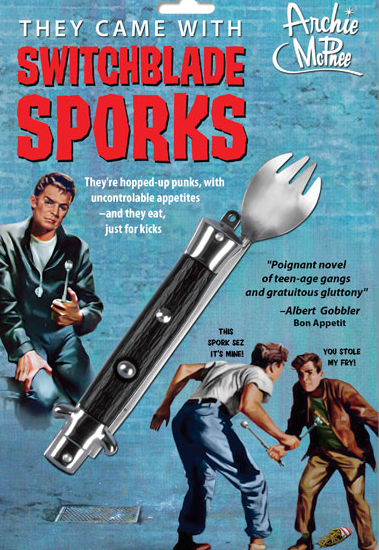
  • "Survival in the epicurean jungle was a matter of brawn and culinary skill, in which mastery of the Switchblade Spork was king. Gangs of sous-chefs and line cooks ruled the streets and no food was safe from the steely glint of their sporks."
  • In tsunami-hit Japan, microfinancing is helping food business get up and running even when banks don't want to lend. "So I wondered if maybe what we do really is important. Many people are waiting for the very original products that we select and sell. They are small goods, but they fill voids in our hearts.”
  • UN asserts that famine is predictable: "drought and famine are not extreme events but “merely the sharp end of a global food system that is built on inequality, imbalances and – ultimately – fragility.”'
  • States, like Massachusetts, are increasingly looking to create brands of provenence to market fisheries. “If we took a look at fish being landed in Massachusetts and put a mark on them ... it allows a story and to tie in what’s happening in New Bedford or Gloucester. It means something to [diners]."

Friday Faves — notes from the new gastroconomy, No. 14

 a weekly round-up of our favorite finds from the front lines of food


  • Old-school kitchen frugality is elevated to a trend as chefs turn scraps into stunning second acts. “It helps in the cost of running a business and it’s respect for the product. That speaks louder than just the food.”
  • Going right to the source, chefs and farmers join forces, briding the kitchen-field divide and resulting in better ingredients. "There are so many parallels, business-wise, between a farm and restaurant operations that often people on both sides don't see."

Friday Faves — notes from the new gastroconomy, No. 13

 a weekly round-up of our favorite finds from the front lines of food

  • A food idea that we hope turns into a bona fide trend: high end vinegar used behind the bar. This week we warmed up with Gingras, an aged apple cider vinegar from an orchard in Quebec, in a rum-based cocktail.  Innovators wanted.

Friday Faves — notes from the new gastroconomy, No. 12

a weekly round-up of our favorite finds from the front lines of food


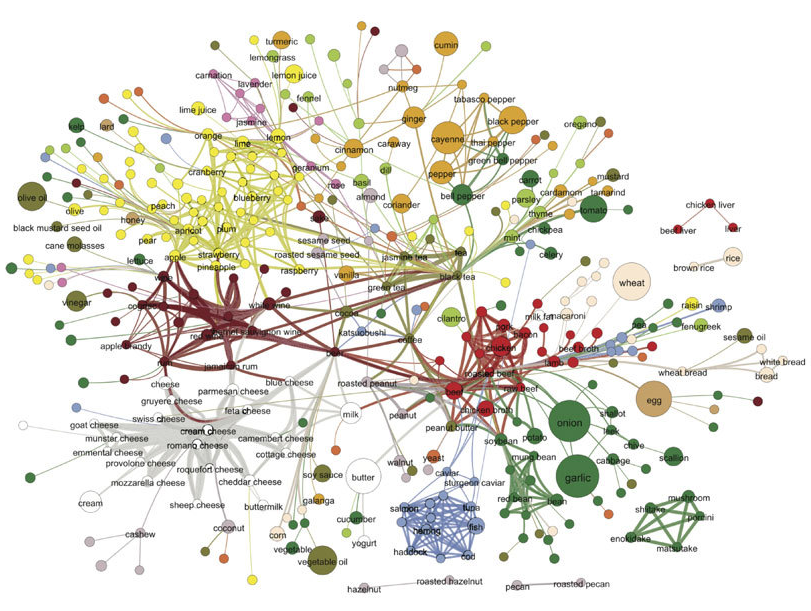
  • Is it possible to scientifically plot out why some flavors go with others? Researchers have tried in Flavor network and the principles of food pairing (illustration above). "A hypothesis, which over the past decade has received attention among some chefs and food scientists, states that ingredients sharing flavor compounds are more likely to taste well together than ingredients that do not."
  • A look at visions of post-industrial Milwaukee explores how urban agriculture and aquaculture are becoming key to reclamation efforts. "What we really like about Sweet Water, and what they’re very adamant about, is that they want to make these spaces productive again. They see themselves as part of a narrative of production in the city of Milwaukee. They see themselves as being in touch with the [industrial past], but working in a way that speaks to the needs of the 21st century."
  • Turning to agriculture as a way to cope with joblessness isn't just for Americans. With Work Scarce in Athens, Greeks Go Back to the Land “In big cities, there’s no future for them. For young people, the only choice is for them to go to the countryside or to go abroad.”